Unified Commerce Without the Fragmentation
Broadleaf's unified commerce platform eliminates the fragmentation between your stores, warehouses, and digital channels — replacing siloed systems with a single, composable architecture your team can extend and own.

Total Order Visibility
Streamline Order Fulfillment and Delight Customers
Simplify order lifecycle management, provide post-sale transparency, and integrate seamlessly with CRM, warehouse, and fulfillment systems.

Key Capabilities for Unified Commerce
-
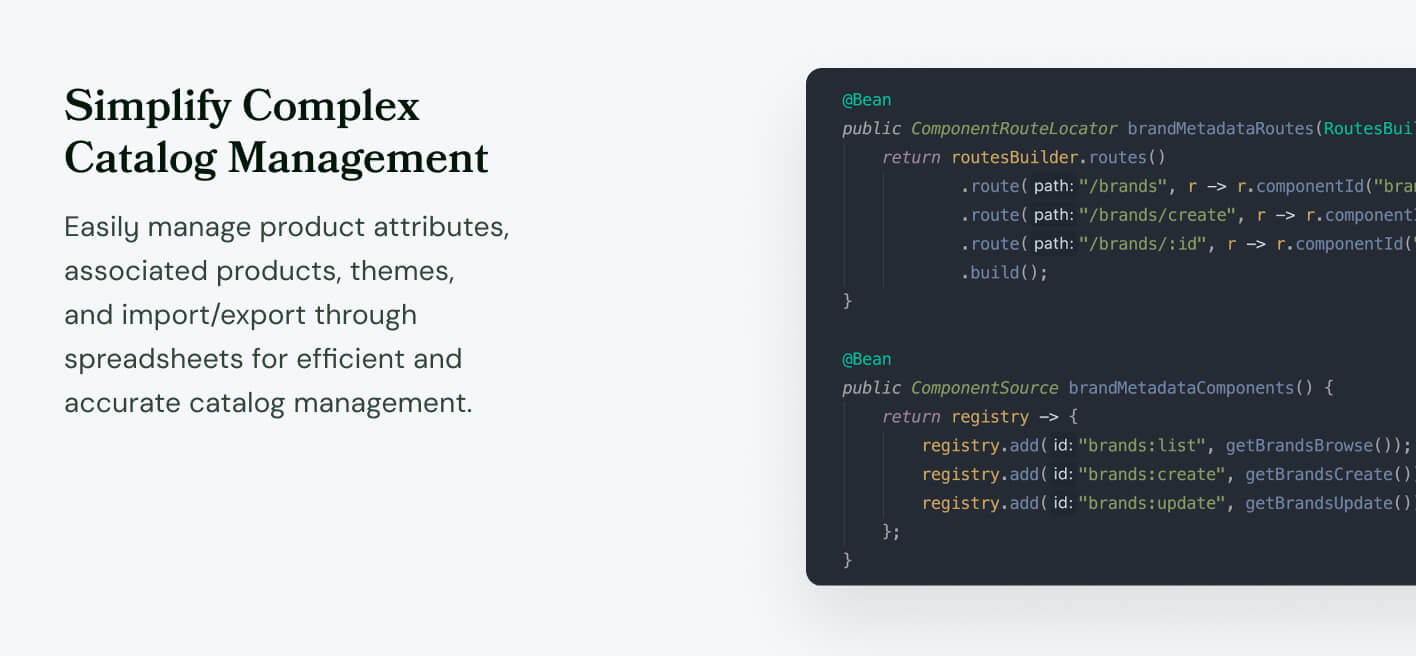
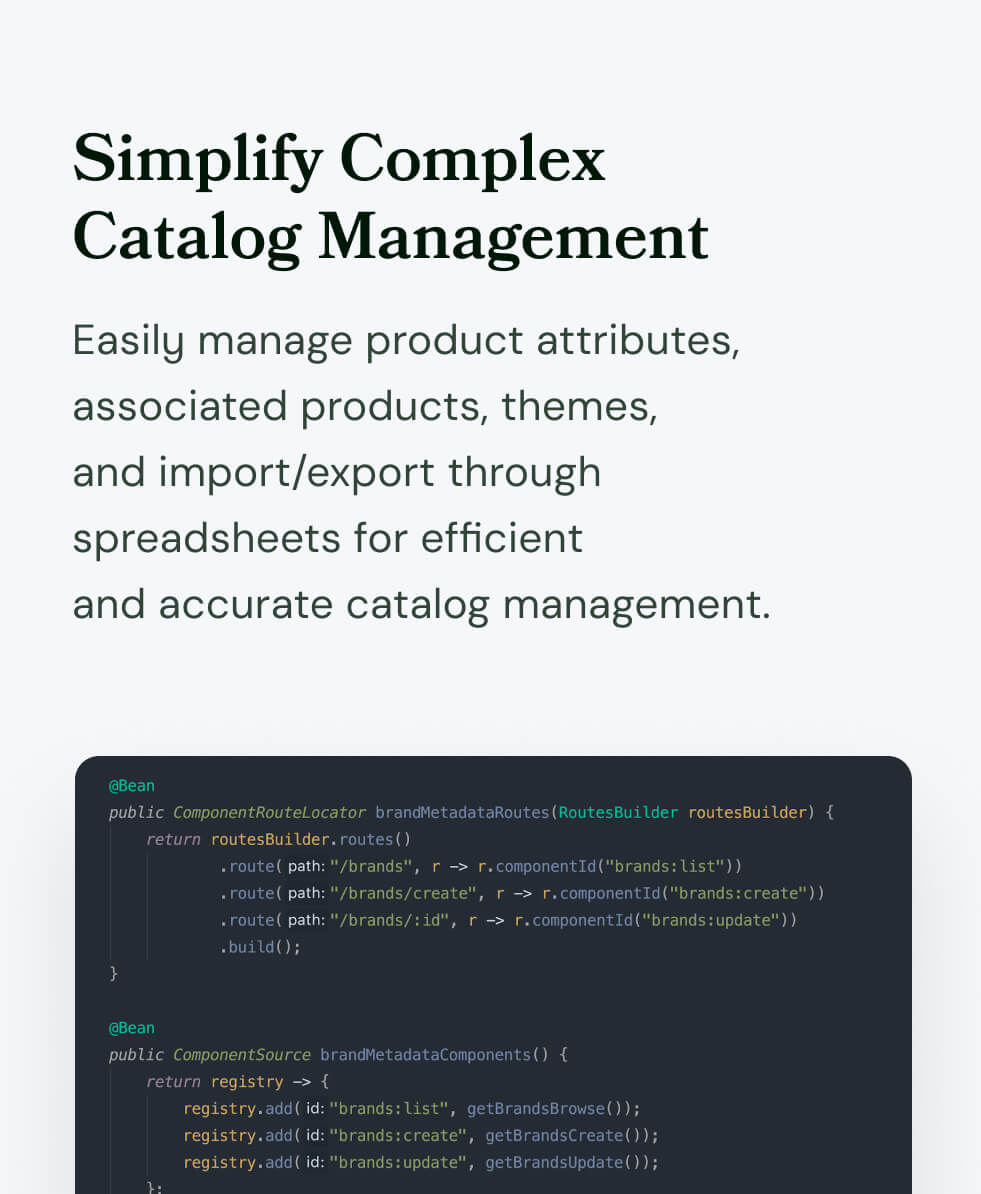
Master Your Product Catalog at Scale
Control product data at every level — attributes, variants, themes, and associated products — and keep catalogs accurate across channels with spreadsheet-based import and export tools.
-
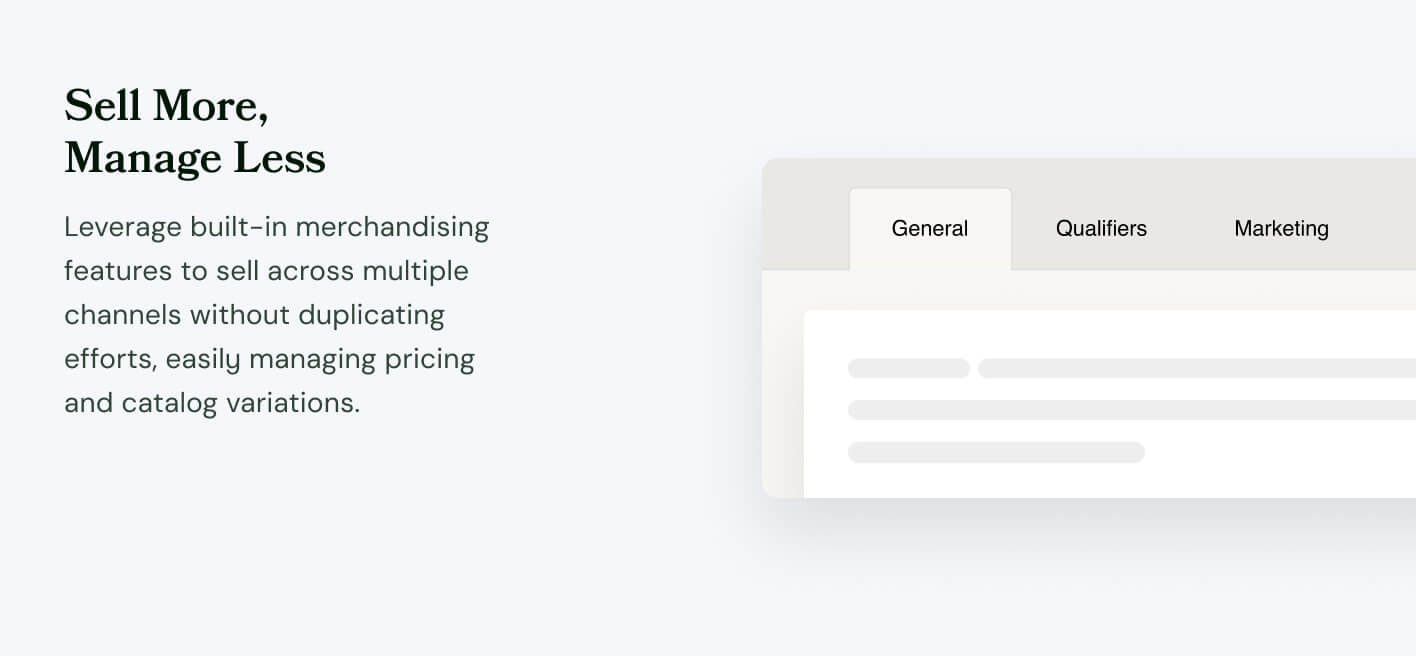
One Admin. Every Channel.
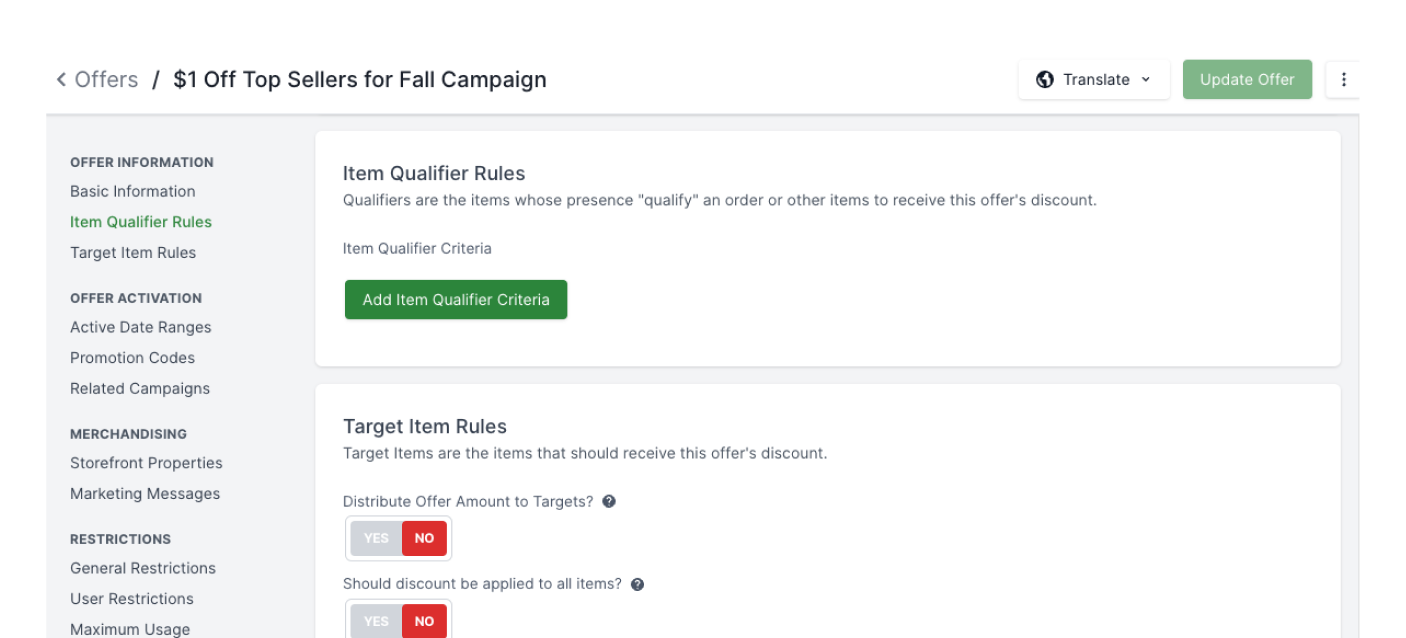
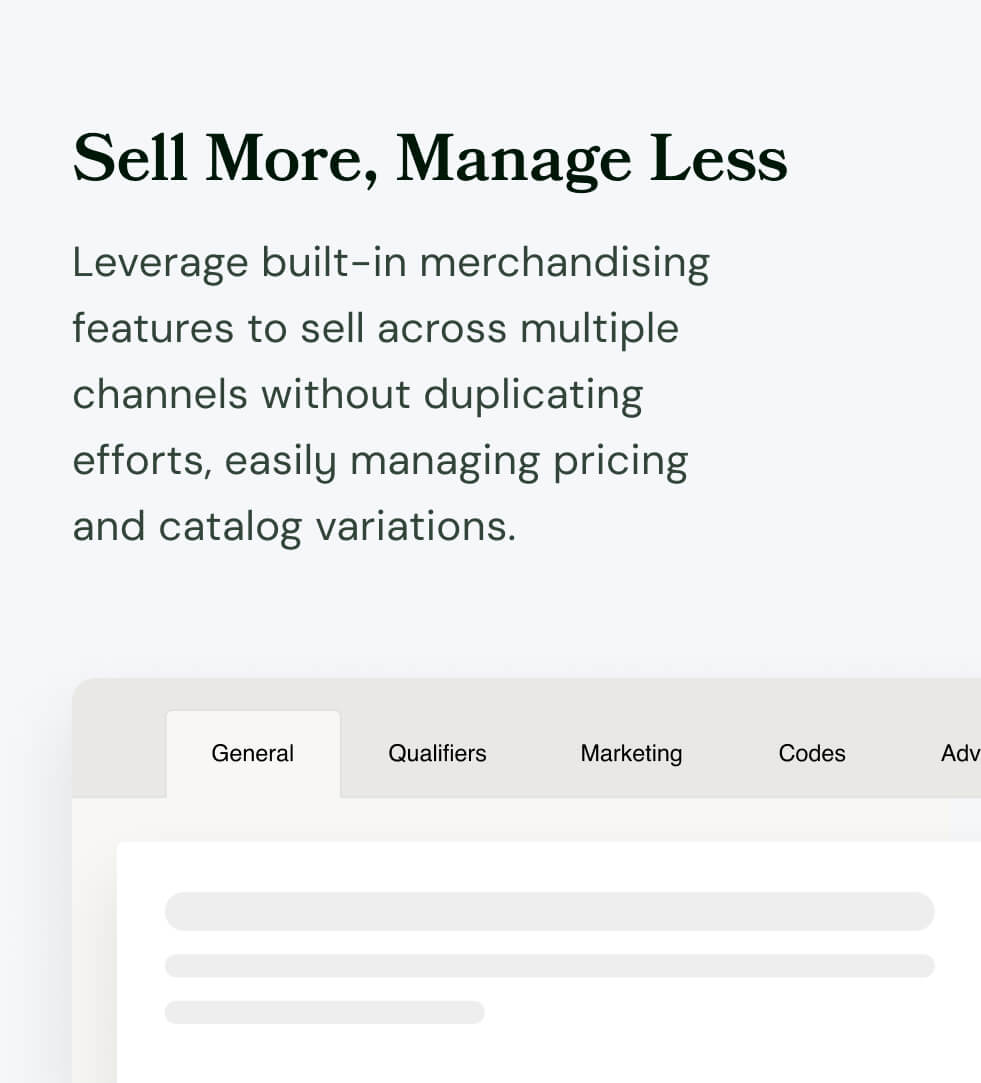
Run promotions, manage pricing, and handle catalog variations across every channel from a single admin — no duplicating work across separate systems.
-
Get Found. Drive Revenue.
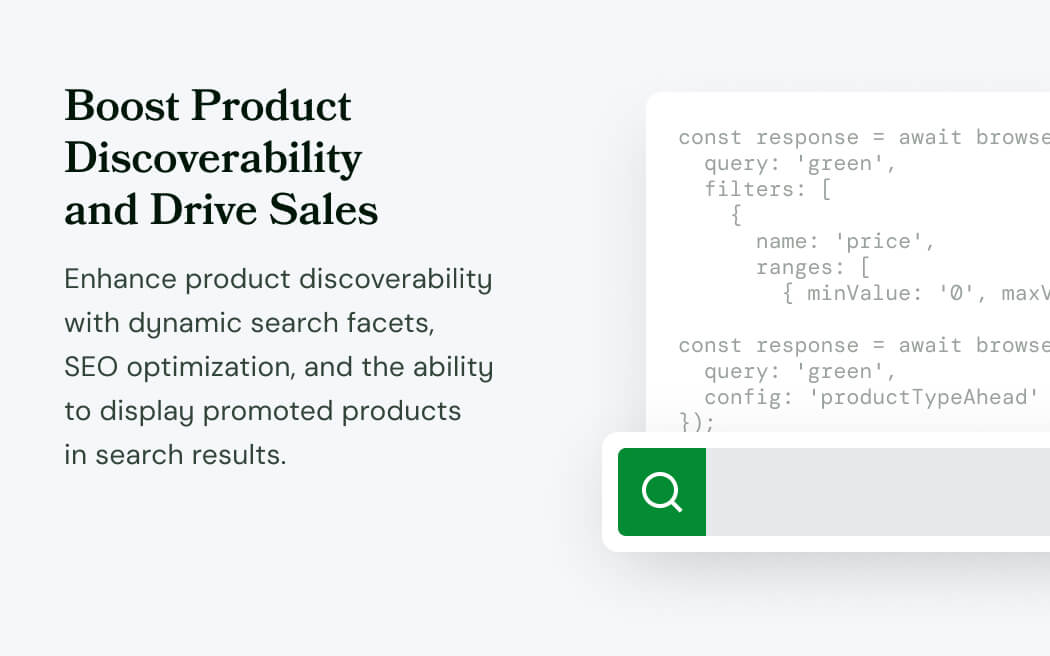
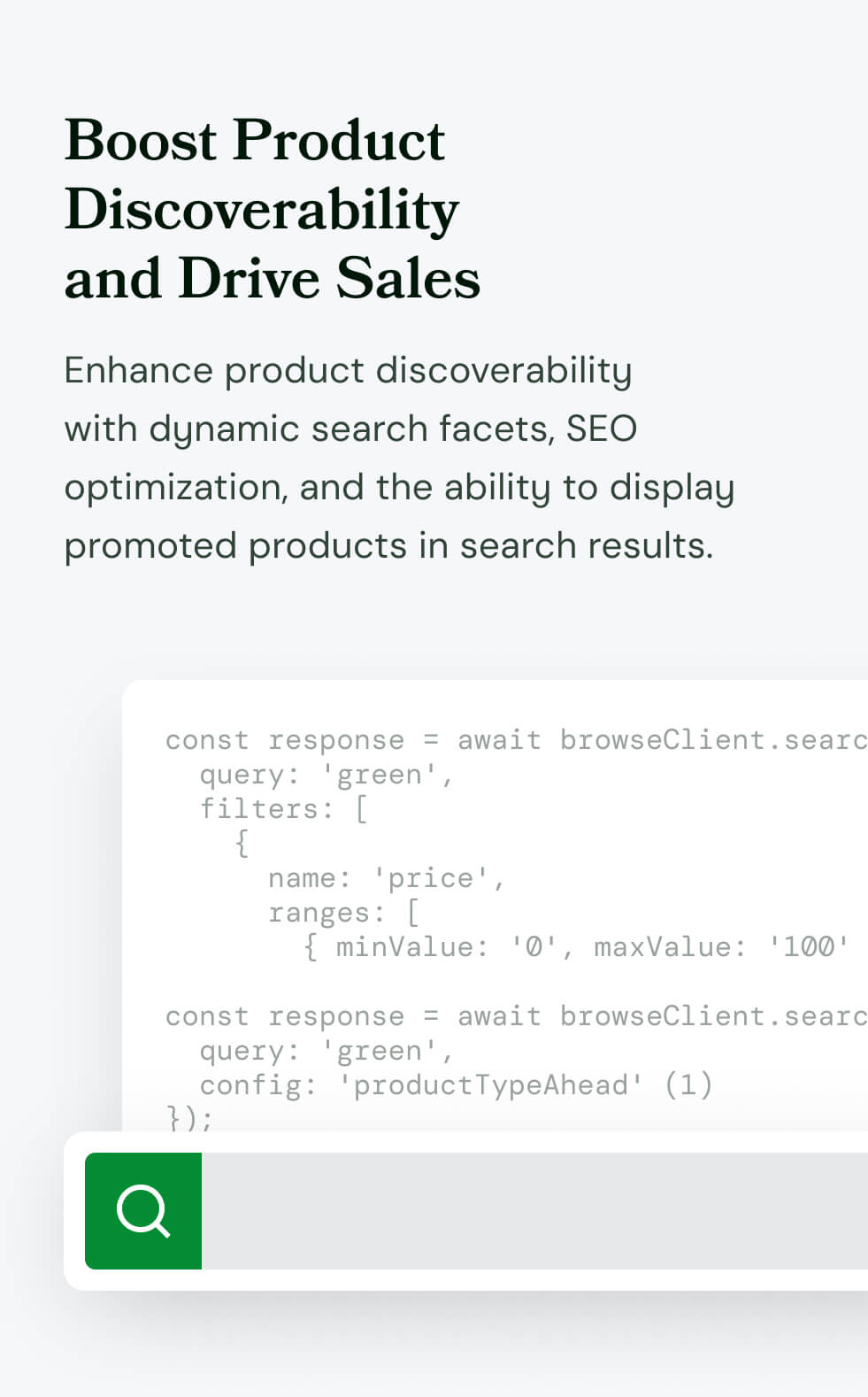
Put the right products in front of the right customers with configurable search facets, SEO-optimized catalog data, and rules-based product promotion in search results.
-
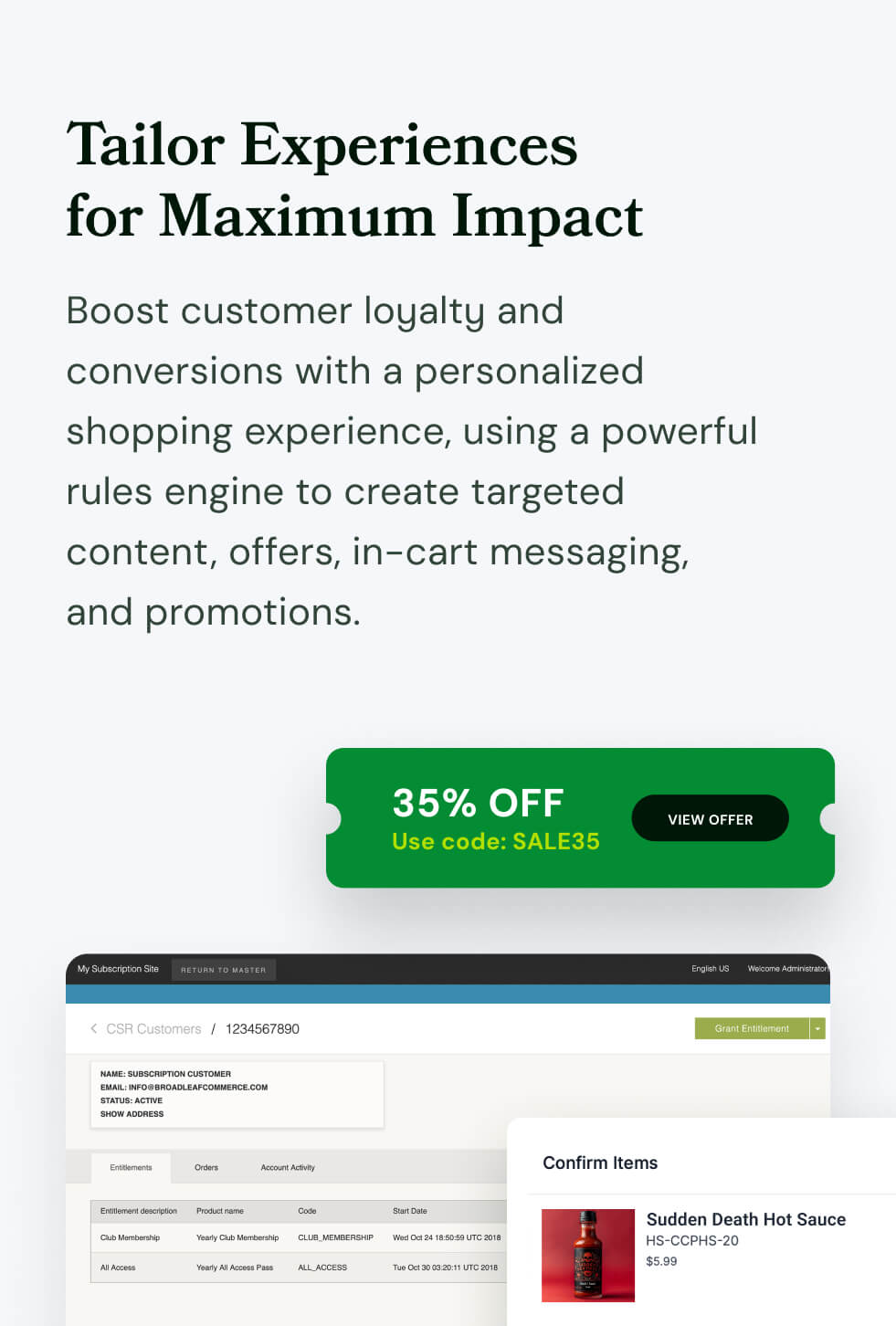
Personalization That Actually Converts
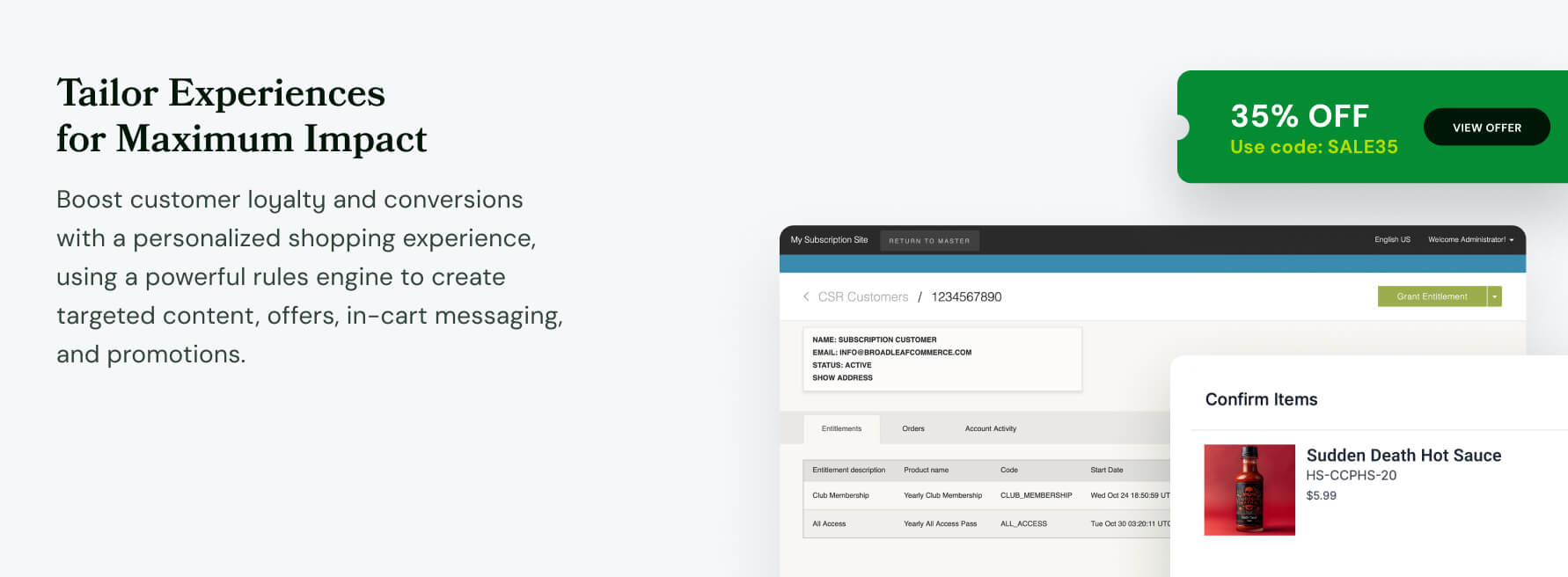
Build personalized journeys for every customer segment using a flexible rules engine that controls content, offers, messaging, and promotions across every channel simultaneously.
-
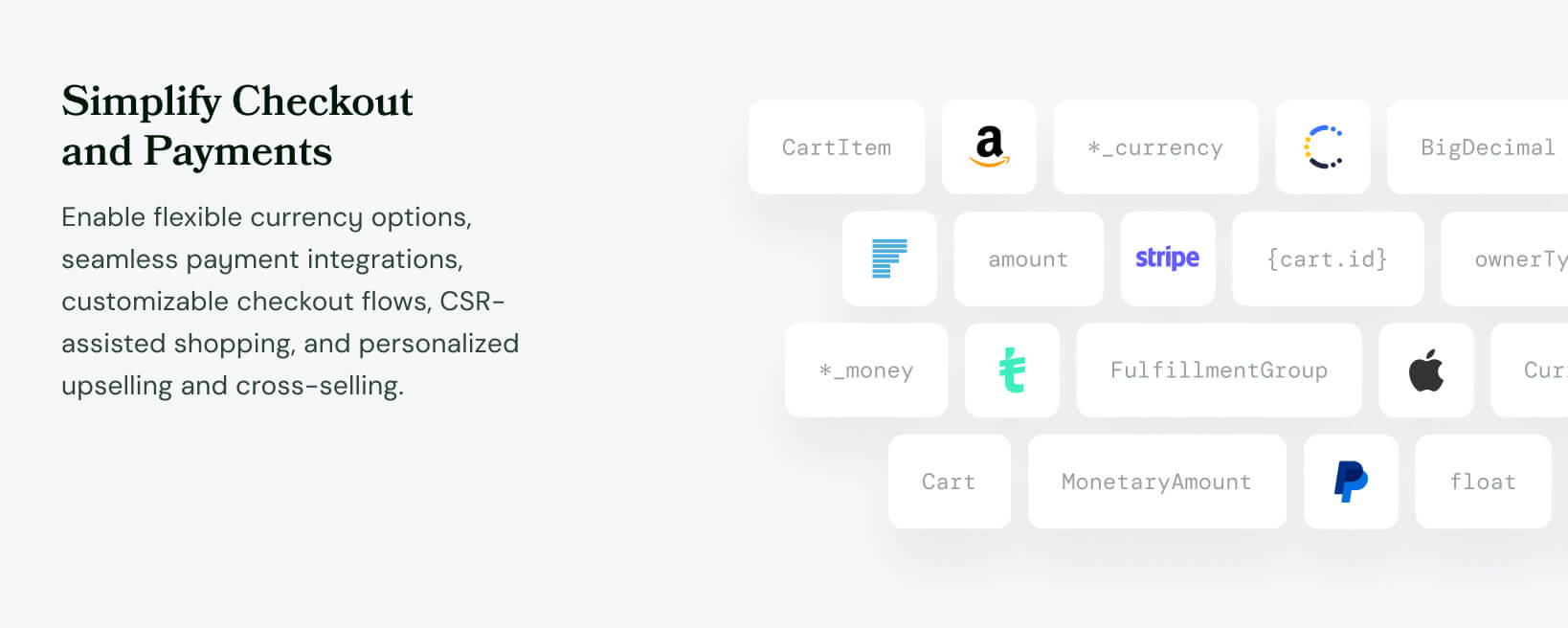
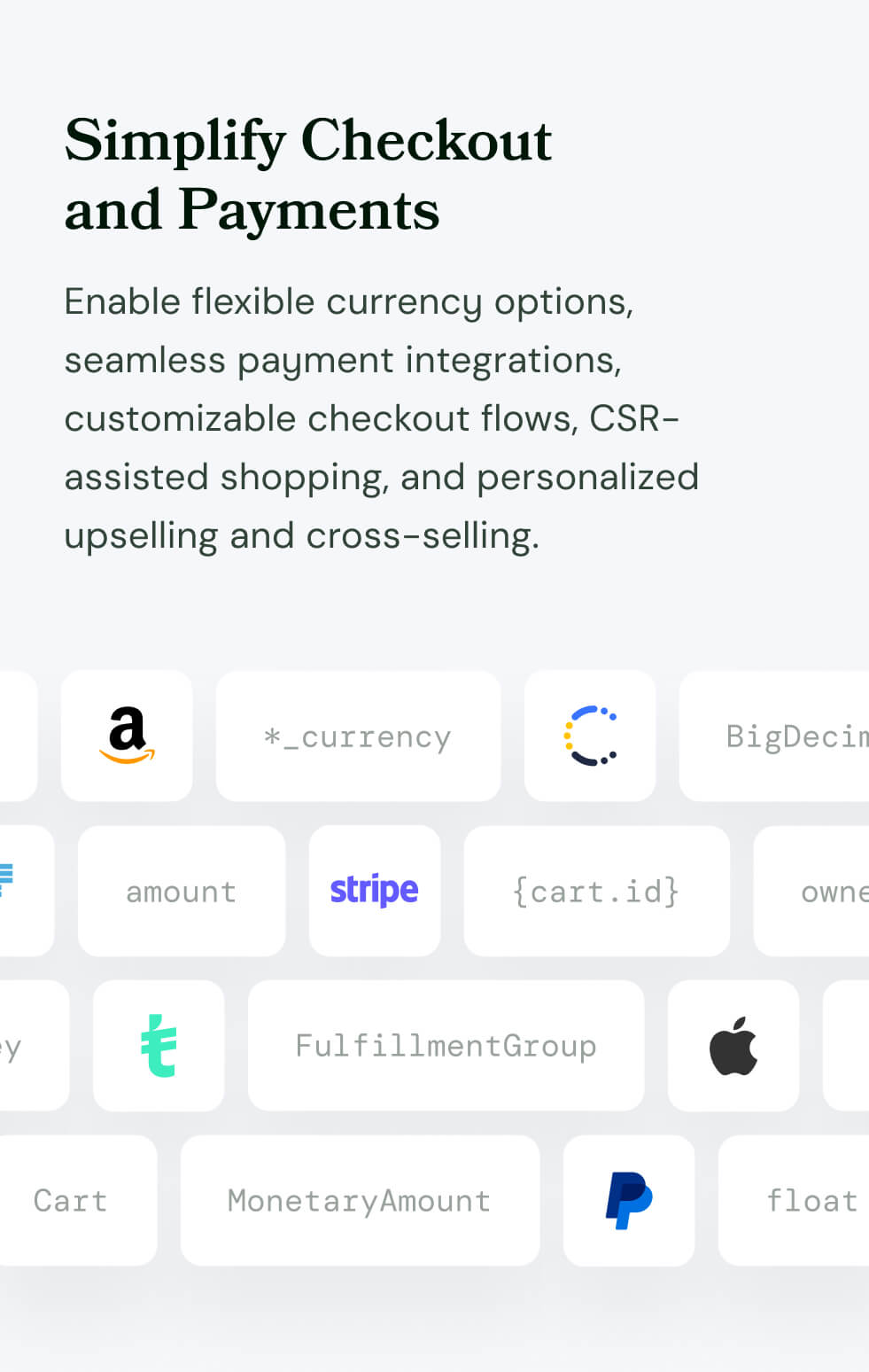
Checkout and Payments Built for Enterprise
Support multiple currencies, integrate with your preferred payment providers, and give your team CSR tools to assist customers directly — all within a fully customizable checkout flow.
-
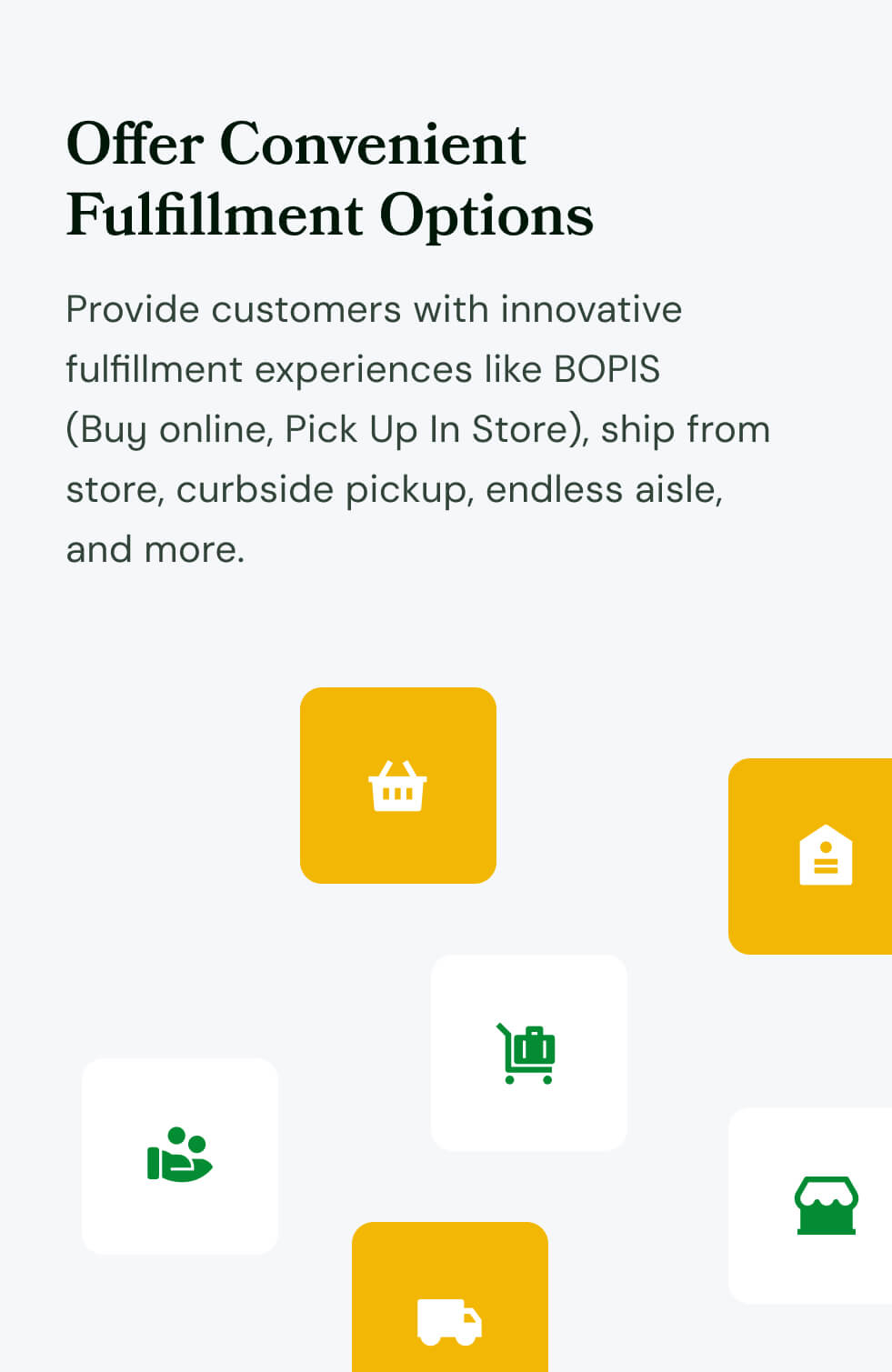
Fulfill From Anywhere. Disappoint No One.
Give customers the flexibility to buy online and pick up in store, ship from any location, or browse endless aisle inventory — all orchestrated in real time across your entire fulfillment network.
Why Broadleaf for Unified Commerce

- Single source of truth for inventory, orders, and customer data across every channel
- Hierarchical Data Management™ supports complex catalog structures across physical and digital touchpoints
- Real-time inventory visibility across stores, warehouses, and distribution centers
- Extreme Extensibility™ at domain, service, and API level — connect any in-store, mobile, or digital system
- Fulfillment orchestration for BOPIS, ship from store, curbside pickup, and endless aisle
- CSR tools give support and in-store teams full visibility into the same customer record shoppers see online
- PaaS with only your business as a tenant — no shared infrastructure affecting your peak performance
- Source-available platform — full access to APIs, data models, core application logic, and Admin console
- Deploy on AWS, Azure, GCP, or on-premise, or fully managed through Broadleaf Cloud
- Dynamic search facets and SEO optimization across every channel and catalog
- Promoted products displayed in search results based on rules you define
- Powerful rules engine for targeted content, in-cart messaging, offers, and promotions
- Flexible multi-currency support across every storefront and channel
- Personalized upselling and cross-selling built into the checkout experience

- Separate inventory pools and order histories per channel requiring manual reconciliation
- Flat catalog structures duplicated across each channel implementation
- Batch-updated inventory creating oversell risk and fulfillment failures
- API-only integration layer limiting how deeply you can connect physical and digital operations
- Fulfillment modes requiring separate third-party tools and custom development
- Customer service operating from a different data set than the storefront
- Multi-tenant SaaS where peak seasons impact platform performance across all customers
- Black-box platform with limited visibility into the underlying architecture
- Vendor-controlled deployment with limited infrastructure flexibility
- Static search with limited faceting requiring third-party search tools to compete
- Promoted product placement requiring custom development or separate merchandising tools
- Basic personalization with limited rules engine capability across channels
- Single currency or multi-currency requiring additional configuration and third-party tools
- Upselling and cross-selling dependent on third-party personalization platforms