Beyond the Interface: A Technical Dive into the Broadleaf Unified Admin
Written by
Cassandra Gaston
Published on
Jul 17, 2025
If you've ever managed an enterprise eCommerce platform, you know the drill. Monday morning starts with checking inventory levels in System A, then jumping to System B to update product descriptions, followed by a quick hop to System C to review marketing campaigns. By lunch, you've clicked through six different interfaces just to get a basic understanding of what's happening in your business.
It's exhausting, error-prone, and frankly, a terrible way to run a modern commerce operation.
Broadleaf Commerce built its Unified Admin specifically to solve that problem. Instead of forcing teams to become interface acrobats, they built a single control center that actually makes sense.
What Makes This Different from Every Other "Unified" Solution
We've all heard the unified dashboard pitch before…usually from vendors who slap a shared login screen on top of disconnected systems and call it integration. The Broadleaf approach is fundamentally different.
Their Unified Admin functions as a true abstraction layer over a distributed microservices architecture. Picture it like this: instead of having 30+ different services speaking different languages, you get one translator who speaks fluent business user.
The interface itself runs on React, which means it's fast and responsive. But here's where it gets interesting: the entire frontend is driven by a metadata framework. Rather than just making things look pretty, it means the interface can adapt and reconfigure itself based on your specific business needs without requiring a development team to rebuild components.
The Secret Sauce: Data Tracking That Actually Works
Here's where most unified systems fall apart: they can't handle the complexity of real enterprise data relationships. Broadleaf's solution revolves around something they call "Data Tracking," and it's pretty clever.
Picture it like having a sophisticated tagging system that automatically knows the context of every piece of data. When you create a product, the system doesn't just store "Product X." It stores "Product X in Tenant A's Catalog B, within Application C's sandbox environment." Such contextual awareness happens through concepts like Catalog Trackable, Sandbox Trackable, and Application Trackable.
Why does contextual awareness matter? Because it enables some genuinely useful capabilities:
Multi-tenant operations: Different business units can operate independently without stepping on each other's toes. Your European division can manage its catalog without accidentally overwriting changes from the US team.
Hierarchical data management: You can set up inheritance patterns where changes cascade down appropriately, but local teams can still override global settings when needed.
Multi-application support: Running both B2B and B2C channels? Each can have its own configuration while sharing underlying product data.
The extensibility story is equally thoughtful. Developers can add custom fields and business logic by extending existing components rather than hacking core code. It's like being able to add rooms to your house without tearing down the foundation.
Where the Rubber Meets the Road: Daily Operations
The real test of any admin interface is how it handles the messy reality of daily operations. Here's where Broadleaf's approach starts to shine.
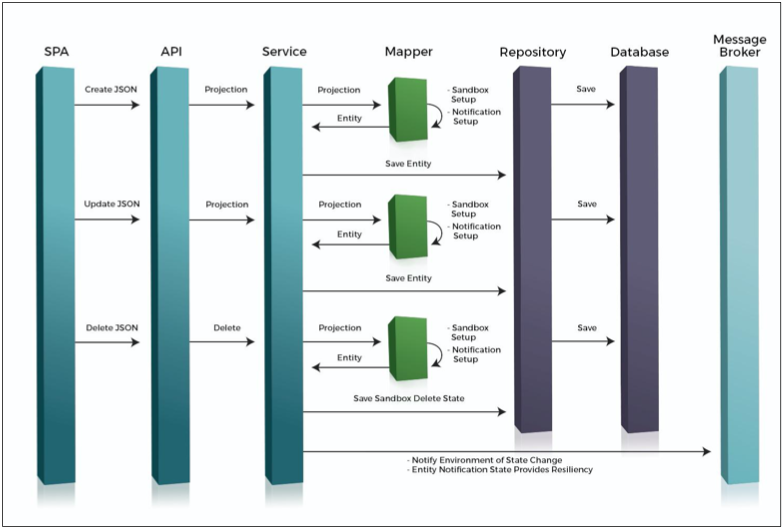
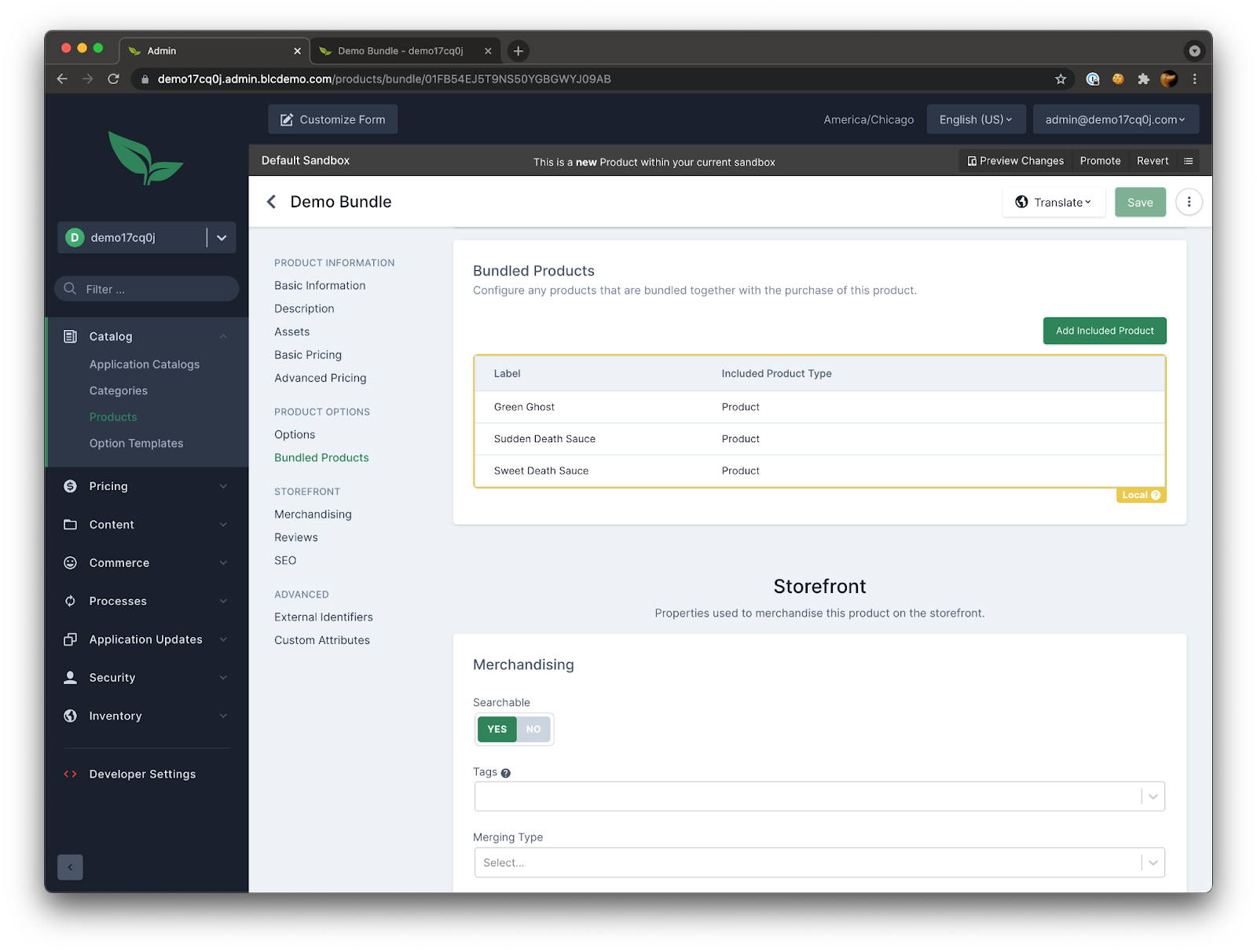
Take their sandboxing feature. Most systems treat staging environments like afterthoughts: separate databases that quickly become outdated or inconsistent. Broadleaf's sandboxes are isolated environments, not in the sense of separate servers or instances, but through a sophisticated data management layer. This allows changes to entities like Categories, Products, or Content Items to be made directly within the production environment without immediate customer visibility. This unique approach streamlines the entire workflow: changes can be previewed by an administrator, promoted for review, approved by a reviewer, and then deployed live, all without the need for separate environments, database synchronization, or complex migrations.
The "Data Workflow" mechanism tracks every change with surgical precision. This creates a complete audit trail and enables proper review processes. No more wondering who changed what, or worse, having changes go live without proper approval.
For teams dealing with large catalogs, the bulk import/export tools are game-changers. While Broadleaf provides out-of-the-box import/export capabilities, clients often develop custom specifications and handlers to precisely manage their data flows. This allows merchandisers to upload CSV files and leverage dedicated orchestration services and processors for efficient, high-volume data ingestion and retrieval, freeing them from manual, error-prone tasks.
Search configuration deserves special mention. Most platforms treat search as an afterthought, forcing you to either accept basic functionality or hire specialists to configure external tools. Broadleaf lets you define search fields, set up filtering options, configure sorting parameters, and adjust result boosting directly through the admin interface. These settings flow directly to the Indexer Service, which transforms your data specifically for Apache Solr out-of-the-box; integration with other search engines like Elastic Search would involve custom development.
Security That Doesn't Get in the Way
Security in enterprise systems often feels like a necessary evil, important but painful to implement and manage. Broadleaf takes a different approach.
The foundation is OAuth 2.0 and JSON Web Tokens, which provide secure authentication across all microservices without creating friction for users. But the real sophistication is in the access control system.
The access control system leverages fine-grained permissions (e.g., READ_PRODUCT, UPDATE_PRODUCT), which are then validated at the API and data layers through a powerful annotation-driven mechanism. This mechanism validates user permissions based on criteria like resource ownership, operation type (e.g., read, update, create, delete), and contextual accessibility (e.g., ensuring a user only accesses data within their assigned tenant or application). This is particularly elegant for complex B2B scenarios where different customer groups need distinct levels of access.
Despite the granularity of Broadleaf’s permissions, the you don’t have to assign permissions one at a time. Broadleaf uses role-based abstractions, making it straightforward to assign and manage access rights without creating administrative nightmares. Define a role once, assign the permissions, and then assign the role to the various users as appropriate.
Why This Matters (Beyond the Technical Details)
Here's what all of these technical details add up to in practical terms: instead of training new team members on six different interfaces, you train them on one. Instead of tracking down changes across multiple systems, you have one audit trail. Instead of building custom integrations every time you need systems to talk to each other, you work within a cohesive ecosystem.
The time savings are substantial, but the reduction in errors might be even more valuable. When people don't have to context-switch between interfaces, they make fewer mistakes. When data flows consistently through defined patterns, there are fewer opportunities for things to get lost in translation.
Looking Forward
The eCommerce landscape isn't getting simpler. If anything, the pressure to support more channels, more personalization, and more complex business models is only increasing. The traditional approach of buying point solutions and trying to integrate them is becoming unsustainable.
Broadleaf's Unified Admin represents a different philosophy, one where the administrative experience is designed from the ground up to handle complexity rather than just paper over it. For organizations serious about scaling their commerce operations, such an architectural approach makes a lot of sense.
The question isn't whether unified administration is the future; it's whether you want to get there by cobbling together disparate systems or by building on a foundation designed for the challenge.