Top Three (non-AI) Things I Learned at InfoTech LIVE 2026
Written by
Brad Buhl
Published on
Jun 15, 2026
Let’s kick things off with a question that might make a few industry power-players shift uncomfortably in their ergonomic chairs: Do analyst relations actually matter anymore?
In a world where premier analyst firms are scrambling through massive organizational restructuring, and corner-office executives are increasingly swapping out traditional research subscriptions for an AI chatbot prompt, it’s a valid existential crisis. Are we witnessing the final days of human-to-human strategic advisory, or does pounding the pavement and looking an analyst in the eye still hold the winning cards?
While the tech world spent last week in Las Vegas hyper-focusing on the generative AI tidal wave, I filtered out the noise at InfoTech LIVE 2026 to bring back the real operational gold. Here are the top three non-AI takeaways that every growth leader needs to chew on — because while AI dominated the conversation in Vegas, the most durable competitive advantages still come down to people, process, and data.
1. Analyst Alliances: Why Human Help Beats the Hyped Bot
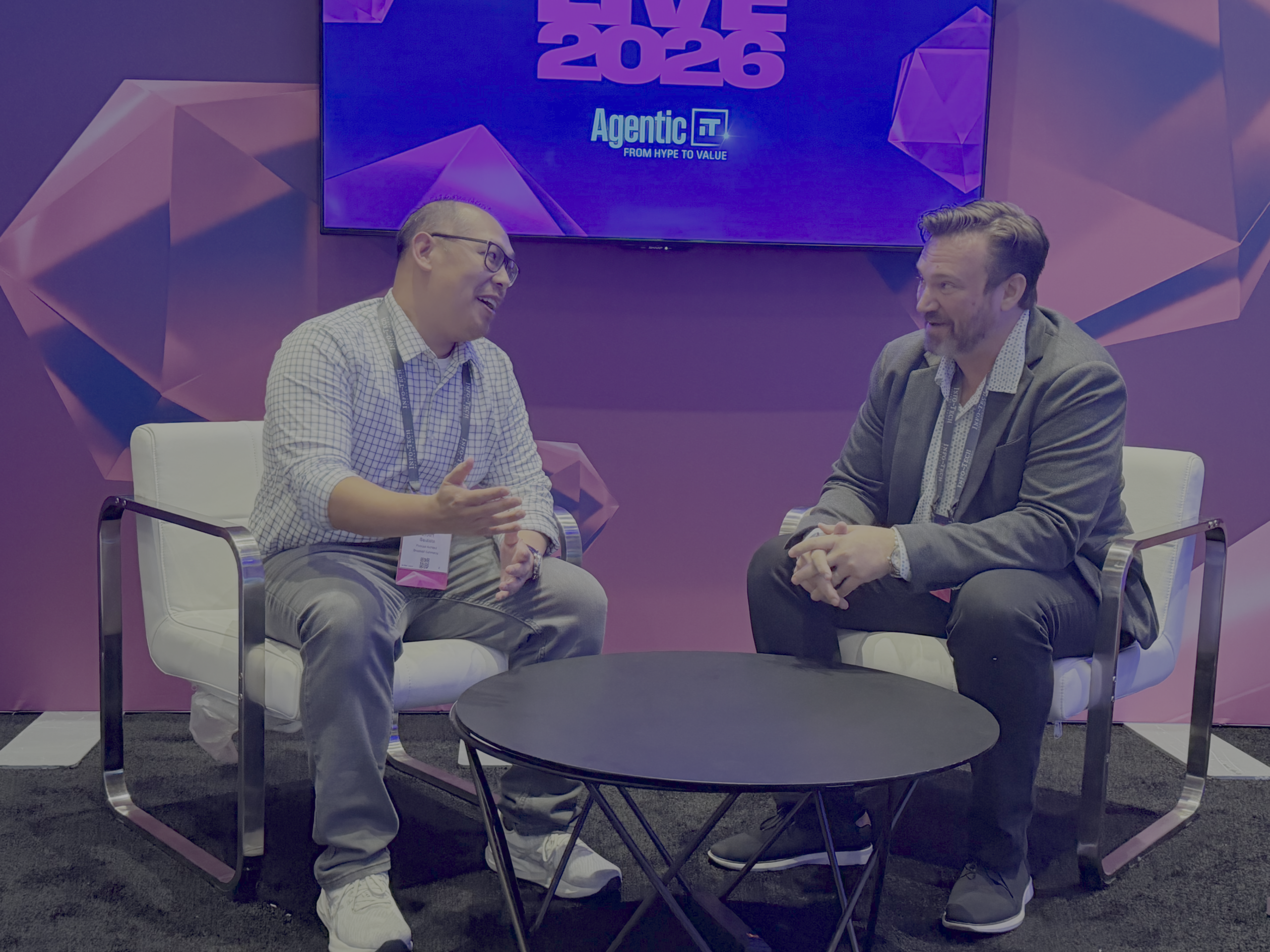
While roaming the floor in Vegas, I spent a good chunk of time formally sitting down with living, breathing analysts. Our conversations focused on two fronts: clearly articulating the real-world outcomes Broadleaf drives for our enterprise commerce clients, and downloading exactly what InfoTech analysts are hearing straight from the market's front lines. They gave me the unvarnished truth on where genuine growth opportunities are hiding, and conversely, what features have officially crossed the line into basic, low-margin commodities.
Could I have spun up a conversation with GenAI to get a generic market summary? Sure. But here is the critical difference: GenAI doesn't take the strategic intel I share and pass it directly back to the exact human beings I need to talk to. Beyond the mechanics of information transmission, there is an irreplaceable energy that comes from human-to-human contact. You simply can't get an event high, build deep professional trust, or spark true collaborative creativity by chatting with a bot. Analyst relations still matter—and they are absolutely worth the investment.
2. Funeral for the Funnel: Signaling a Smarter Sales Strategy
If you are still trying to force your prospective buyers through a rigid, linear marketing-to-sales pipeline, it's time to face reality: The traditional marketing funnel is dead.
As Julie Geller, Principal Research Director at the InfoTech Agentic Research Group, brilliantly demonstrated in her breakout session, "The funnel is fiction". Why? Because as Clayton Christensen famously observed, customers don't just buy products; they hire them to do a specific job. And let's be completely honest—buyers are inherently terrible at buying.
Instead of spending countless hours trying to automate a broken, siloed funnel that fails to capture modern browsing and buying habits, revenue leaders need to pivot toward Signal Intelligence to dynamically engage potential clients. Geller made it clear that "Account intelligence is the new MQL". We don’t need to manufacture a massive, bloated pipeline; we need to start codifying real-time behavior.
The data she shared proves that hyper-personalization is no longer optional for enterprise survival:
- Personalization Priority: 79% of consumers will only engage with personalized offers that are directly informed by their previous interactions.
- Expectation Elevation: 72% of customers explicitly expect companies to understand and anticipate their unique, individual needs.
- Revenue Realization: Organizations actively leveraging intent data experience an average lift of 20% in their upsell and cross-sell revenue.
Geller's framework maps out a signal-driven Ideal Customer Profile (ICP) across three distinct layers that dynamically match the right message to the right milestone:
- Adaptive (User) Behavior Signals: This engine tracks feature adoption, individual role activity, and content downloads. Remember: A click is not the insight. A change in behavior is the insight.
- Actionable (Committee) Consensus Signals: This layer monitors buying-group alignment, tracking who is connecting data, attending meetings, and how influence is shifting within the account. The golden rule here? One person browsing is interest. A committee moving together is intent.
- Agile (Account) Momentum Signals: This monitors overarching account health, competitive evaluation spikes, renewal risks, and pipeline velocity to dictate exactly where your sales team should spend their next hour.
3. Data Deliverance: Building Foundations, Not Just Fences
To wrap things up, we have to look at the wise words of Dr. Jeremy Roberts, who served as the closer for the entire InfoTech event. He neatly cut through the tech-stack noise with the truth:
"It’s not about technology. It’s about the data foundation you build and the choices you make with it."
As a guy who has spent the last 13 years navigating the brutal complexities of enterprise commerce at Broadleaf, this hits close to home. Tech architectures evolve, buzzwords mutate, and platforms shift. But your data? Your data is the crown jewel of your enterprise.
Too many SaaS platforms today trap you in proprietary silos, hit you with unpredictable transaction tax scaling, or hold your insights hostage behind vendor lock-in. That is why our philosophy at Broadleaf has always been uncompromising: your data is always your own. Whether you want to feed it into a modern signal intelligence matrix, leverage it for localized optimization, or migrate workflows, you retain total control. You own the foundation, you make the choices, and you reap the revenue.
The uncomfortable reality is that most enterprises are sitting on a goldmine of behavioral and transactional data they have never fully activated. Roberts' message was a wake-up call: stop chasing the shiniest new platform, and start treating your data infrastructure as a strategic asset. That means investing in clean, portable, vendor-neutral data pipelines that survive platform migrations and power whatever intelligence layer comes next — AI-driven or otherwise.
At Broadleaf, we have seen firsthand what happens when enterprise commerce teams finally break free from proprietary data silos. Conversion rates improve, personalization deepens, and the business gains the agility to pivot without starting from scratch. The foundation is not glamorous. But it is everything.
So here is the throughline across all three takeaways: in a world obsessed with AI-powered everything, the real differentiators remain stubbornly human. Invest in the relationships that no algorithm can replicate. Read the signals that tell you what buyers actually need. Own the data that powers every decision you make. If you want to explore how Broadleaf can help your enterprise put these principles into practice — from open, data-portable commerce foundations to signal-driven personalization — let’s talk.