Engineering Headless Commerce with Broadleaf APIs
Written by
Elbert Bautista
Published on
Jul 08, 2025
Modern digital experiences frequently push the limits of traditional eCommerce platforms, often exposing challenges with scaling and intricate integrations. This friction has accelerated the industry's embrace of headless commerce, an architectural model where the frontend operates independently of its backend logic.
For technical professionals and architects building highly adaptable digital solutions, understanding the platform's API-first methodology and its integration patterns is fundamental.
Why Headless APIs Drive Technical Agility
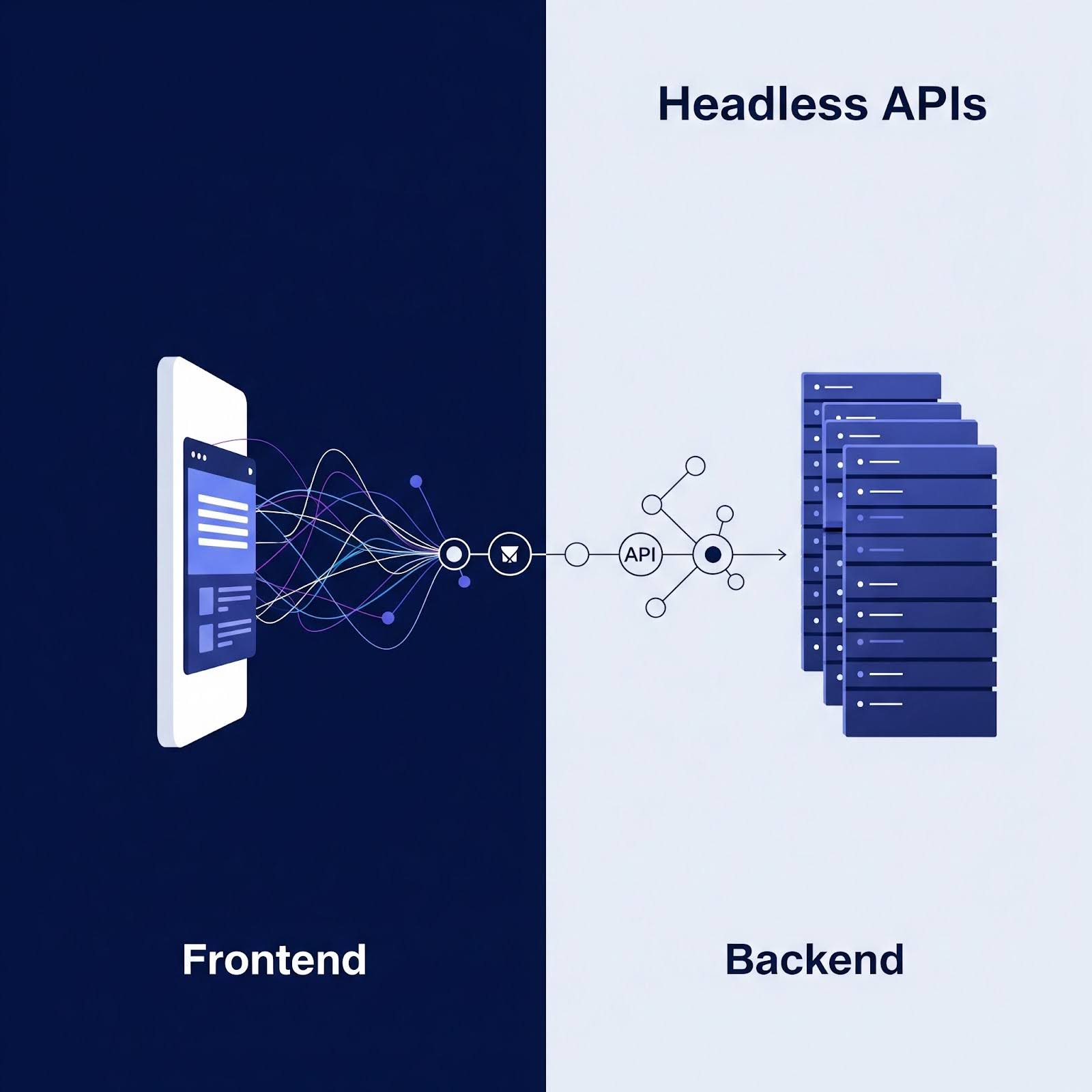
Headless commerce fundamentally decouples the frontend presentation layer from the backend commerce logic. An API-first platform takes this approach further, building all core functionalities and data accessibility around well-defined APIs.
Architecture directly addresses several common pain points encountered with tightly coupled systems. First, it ensures technology stack agnosticism, allowing technical professionals to select their preferred frontend technologies, such as React, Angular, native mobile apps, or Progressive Web Apps (PWAs), without being constrained by the backend framework. That capability is key to avoiding vendor lock-in at the presentation layer. Second, this leads to accelerated development cycles.
Teams can build new user experiences and integrate with external systems via a highly modular process. This structure reduces interdependencies, enabling engineering teams to work faster and deploy updates with greater frequency. Finally, headless APIs facilitate independent service evolution, meaning backend services can be updated, scaled, or even replaced without directly impacting the frontend or other parts of the system, which simplifies maintenance and reduces deployment risk.
Broadleaf's API-First Philosophy: A Layered Approach
The platform's API-first design manifests in a layered microservices architecture, providing distinct interaction points for those implementing solutions. Its structure emphasizes clean boundaries, security, and controlled extensibility.
At its foundation are Resource Tier Services, foundational commerce microservices like Catalog, Inventory, Cart, Order, and Customer. These services manage specific business domains and their persistence. Inter-service communication at this tier typically occurs via asynchronous messaging channels, promoting loose coupling.
Building upon the resource tier are Composite / Orchestration Services. For simplified frontend integration in headless commerce, Broadleaf's APIs, such as CartOperationService and CatalogBrowseService, aggregate and process data from multiple backend services, delivering unified responses. This exemplifies their API-first design.
These services manage intricate processes, for instance, adding products to a shopping cart or constructing comprehensive product detail views. This directly reduces the number of API calls a frontend must make.
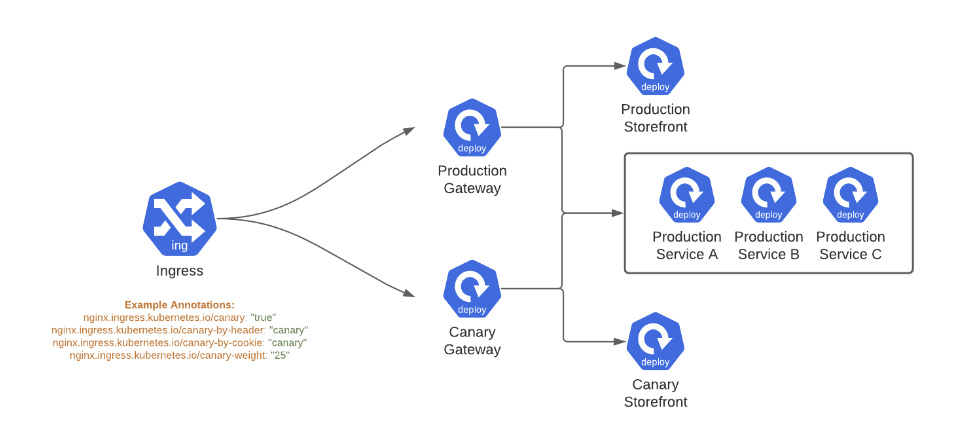
The outermost layer is the API Gateway Layer, leveraging Spring Cloud Gateway. This layer functions as a central entry point, handling request routing, cross-origin resource sharing (CORS), and enabling Backend-for-Frontend (BFF) patterns. It provides a perimeter for security and traffic management.
Interacting with the platform's APIs is straightforward using standard HTTP clients or leveraging provided SDKs, regardless of the frontend technology.
All platform APIs are Standard RESTful Access points, adhering to OpenAPI specifications, offering clear contracts for direct consumption via HTTP requests. Detailed endpoint descriptions and payloads are available through our OpenAPI documentation.
To accelerate frontend implementation, the platform offers a suite of JavaScript SDKs designed to simplify frontend workflows. These SDKs include typed Web Clients and core TypeScript definitions for commerce domains. Commerce SDKs, for example, provide typed Web Clients (e.g., BrowseClient, CartClient, CheckoutClient) for direct interaction with domain-specific APIs. Auth SDKs facilitate authentication flows, session management, and interaction with the authentication microservice, while Payment SDKs offer utilities and vendor-specific Web Clients for payment operations. Importantly, SDKs are designed with extension points, allowing technical professionals to align them with custom backend services.
API access is secured using OAuth 2.0 with JSON Web Tokens (JWTs) for authentication and authorization. These tokens contain identity, user context, and authorization claims. An optional Guest Checkout Token mechanism provides an additional layer of security for anonymous carts during sensitive operations.
Building Seamless Integrations: Common Patterns
Platform APIs support and encourage established integration patterns critical for complex eCommerce environments.
The Backend-for-Frontend (BFF) pattern is exemplified by orchestration services like CatalogBrowseService. This service aggregates data from multiple backend microservices (e.g., Catalog, Pricing, Offer, Search, Content) into a single, optimized response for specific frontend needs. The approach effectively reduces frontend complexity, minimizes client-side calls, and tailors API responses to particular UI requirements.
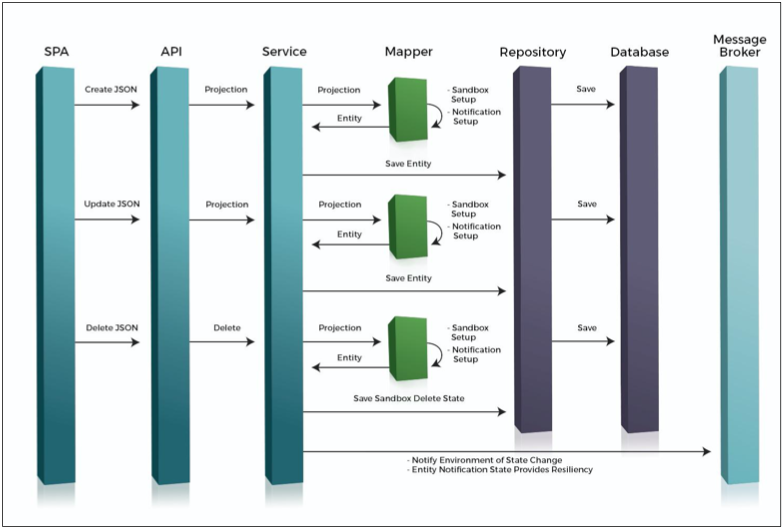
Another crucial pattern is Event-Driven Architecture (EDA). Leveraging Spring Cloud Stream, the platform facilitates asynchronous, event-driven communication between microservices via a configurable message broker (e.g., Apache Kafka). This pattern proves critical for data synchronization across microservices, including inventory updates post-checkout, and for building resilient, loosely coupled distributed systems.
Extensibility: Controlled Customization
A key benefit for technical teams is the platform's extensive extensibility model, which promotes clean layering of custom code and avoids direct modification of the core framework. This simplifies upgrades and enhances maintainability.
Implementers can extend existing platform domain model objects (e.g., Product, Cart) in Java to introduce custom fields and features. Database schema changes are managed declaratively using Liquibase.
Furthermore, platform components are typically registered as Spring Beans and designed with @ConditionalOnMissingBean. This pattern ensures that an implementer's custom solution automatically takes precedence over the default, allowing targeted overrides of business logic or API endpoint behavior without altering core code.
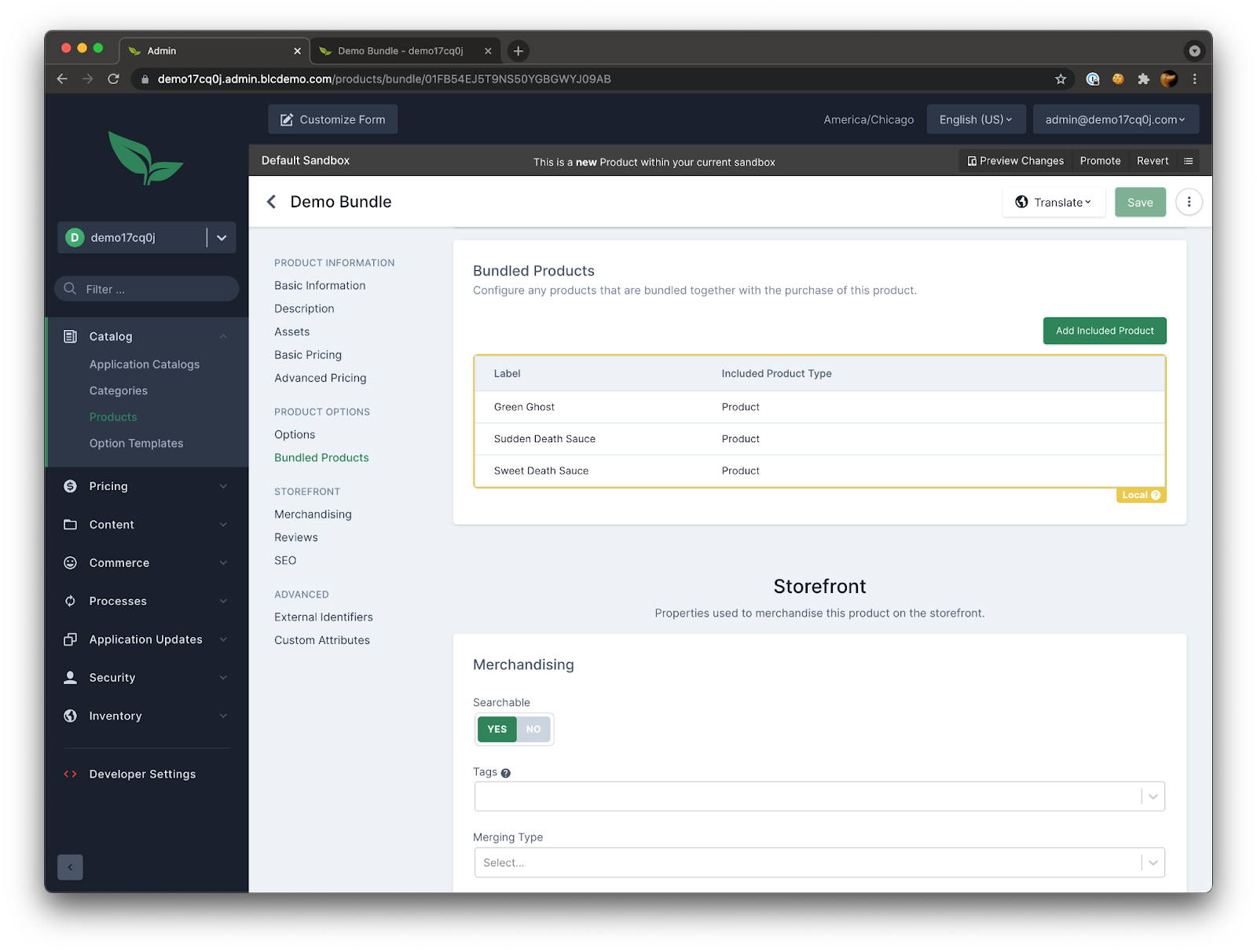
The backend APIs also provide metadata utilized by the administrative console for its forms and views.This enables technical professionals (or even business users with the right tools) to customize the admin UI by simply extending the backend data model, and those changes are automatically reflected, reducing direct UI coding efforts.
Conclusion
For technical professionals, the platform's headless APIs offer a compelling architectural blueprint. They provide the necessary tools and patterns to:
- Gain Control over the Technology Stack: Choose preferred frontend technologies and integrate with external systems via well-defined APIs.
- Enhance Development Efficiency: Leverage SDKs, embrace event-driven patterns, and work with a modular codebase.
- Build Maintainable and Future-Proof Solutions: Utilize extensibility points to cleanly layer custom logic and simplify platform upgrades.
- Architect Resilient Distributed Systems: Benefit from built-in security features and robust inter-service communication patterns.
This API-first foundation empowers engineering teams to engineer adaptable, high-performing commerce experiences that meet evolving business demands.