The Distributed Admin: Personalizing the Back-Office at Scale
Written byNathan Moore
Published onMay 13, 2026
When we think of eCommerce "scale," we usually think of traffic—millions of customers hitting a storefront. But for a national leader in customized branding, the real scaling challenge was human. They didn't just have 20 expert merchandisers; they had 10,000 distributed partners—school administrators, local volunteers, and everyone in between.
The Paradox of the "Standard" Admin
Standard eCommerce admins are built like a cockpit—hundreds of switches and data grids designed for power users. For a local administrator who just needs to upload a logo and track this week's sales, that cockpit is a liability. It's overwhelming, intimidating, and increases the likelihood of human error.
We worked with the client to build a Polymorphic Admin: one platform that adapts to who’s logging in and what they’re there to do.
Metadata: The UI’s Secret Blueprint
We didn't just hard-code a different interface for these 10,000 users. Instead, we leaned heavily into Broadleaf’s Admin Metadata. Metadata allows us to treat the UI as data. We defined custom properties that changed field labels, rearranged groupings, and toggled visibility. This approach allowed us to:
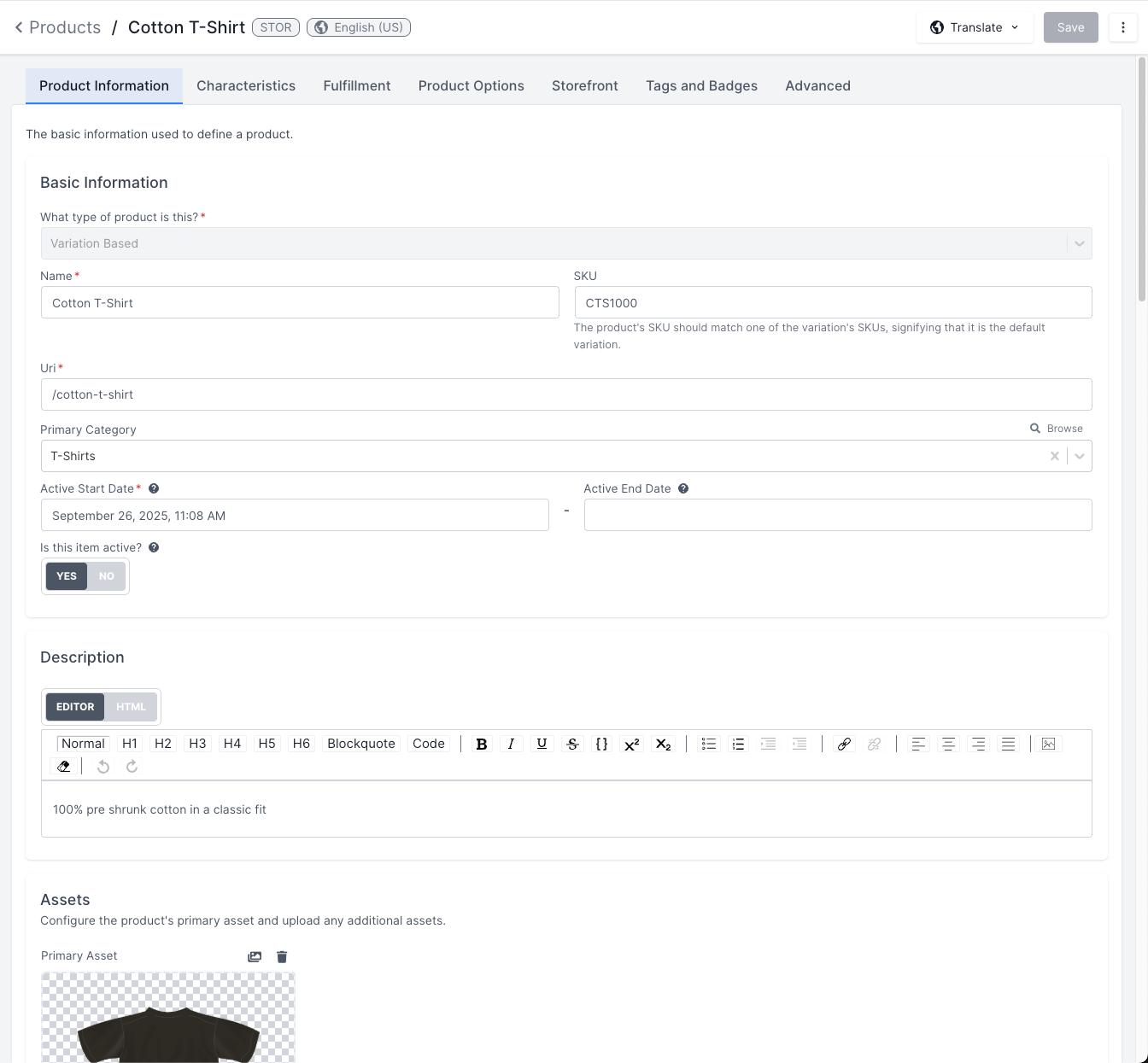
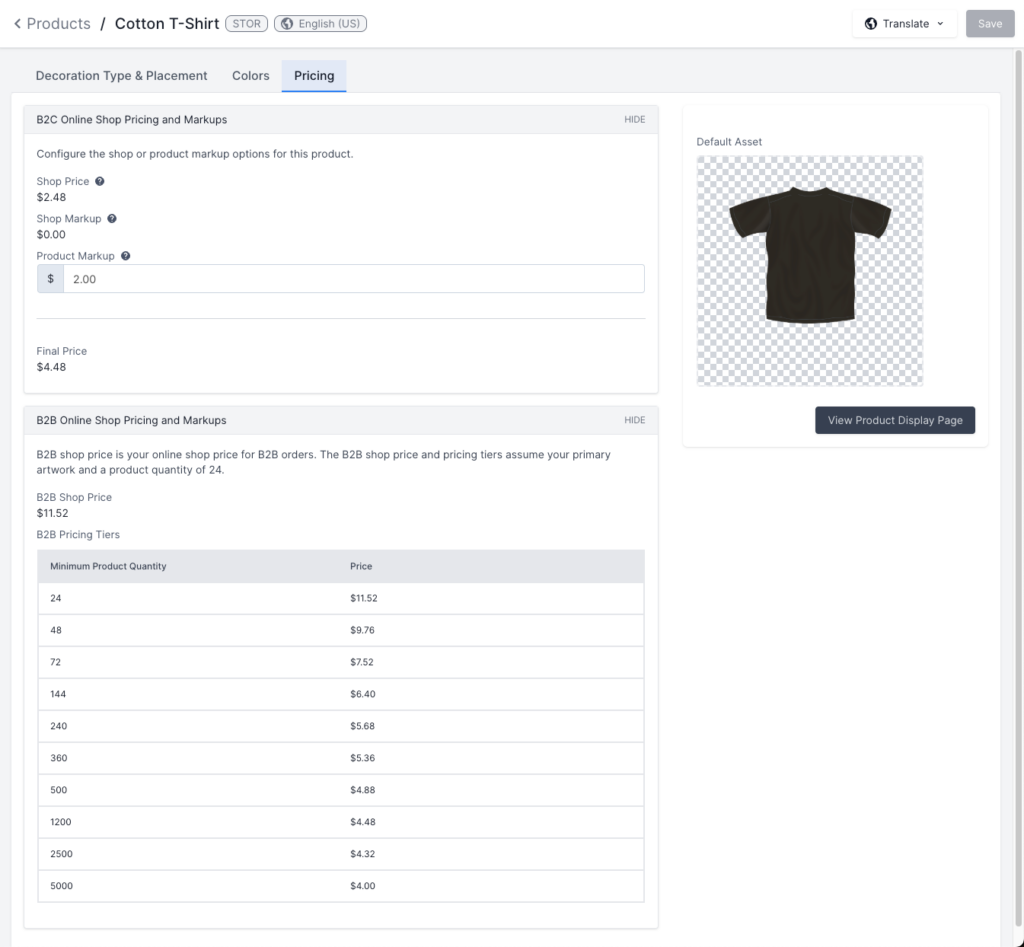
Simplify the Language: We replaced technical jargon like "SKUs" and "Dimensions" with partner-friendly terms like "Logo Assets" and "Shop Branding."
Contextual Control: The system uses metadata to hide advanced enterprise features from local users while keeping them accessible for the corporate team.
Maintenance at Scale: Because these changes are metadata-driven, we can update the experience across all 10,000 users by updating a few configuration values—no frontend rebuild required.
Local Administrator Product View:
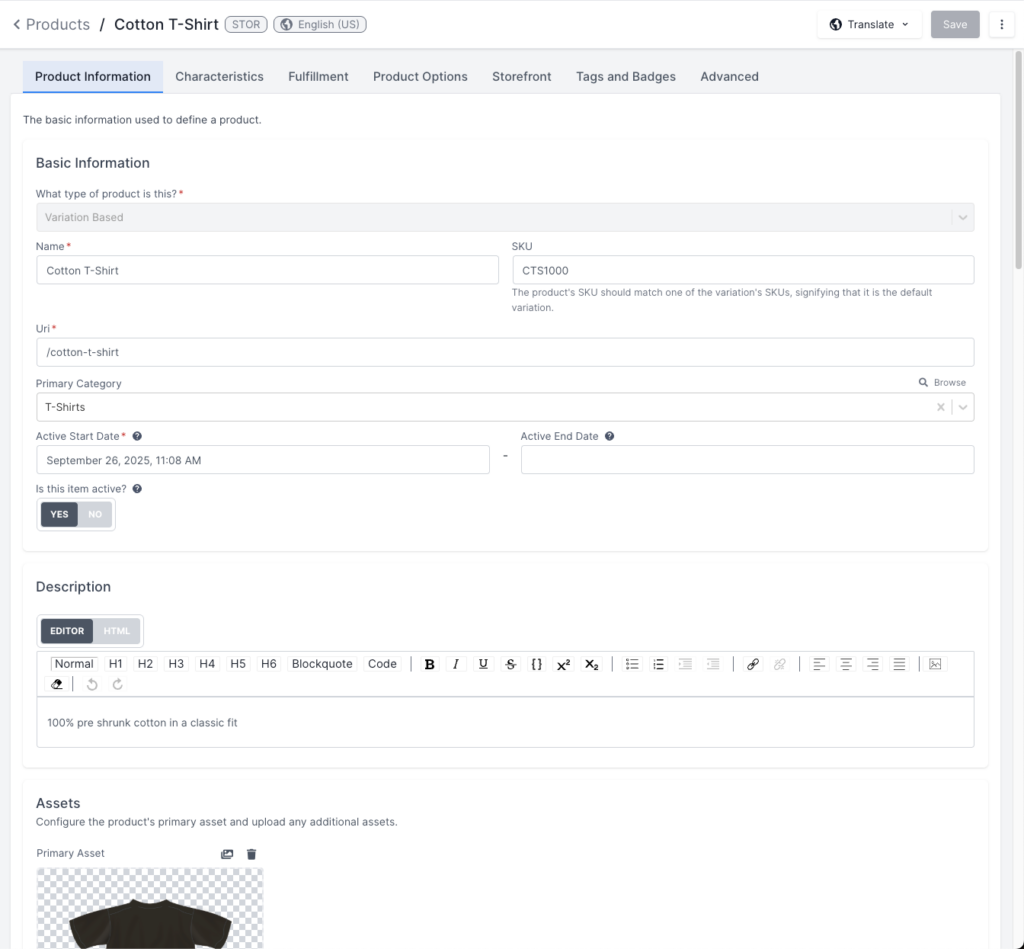
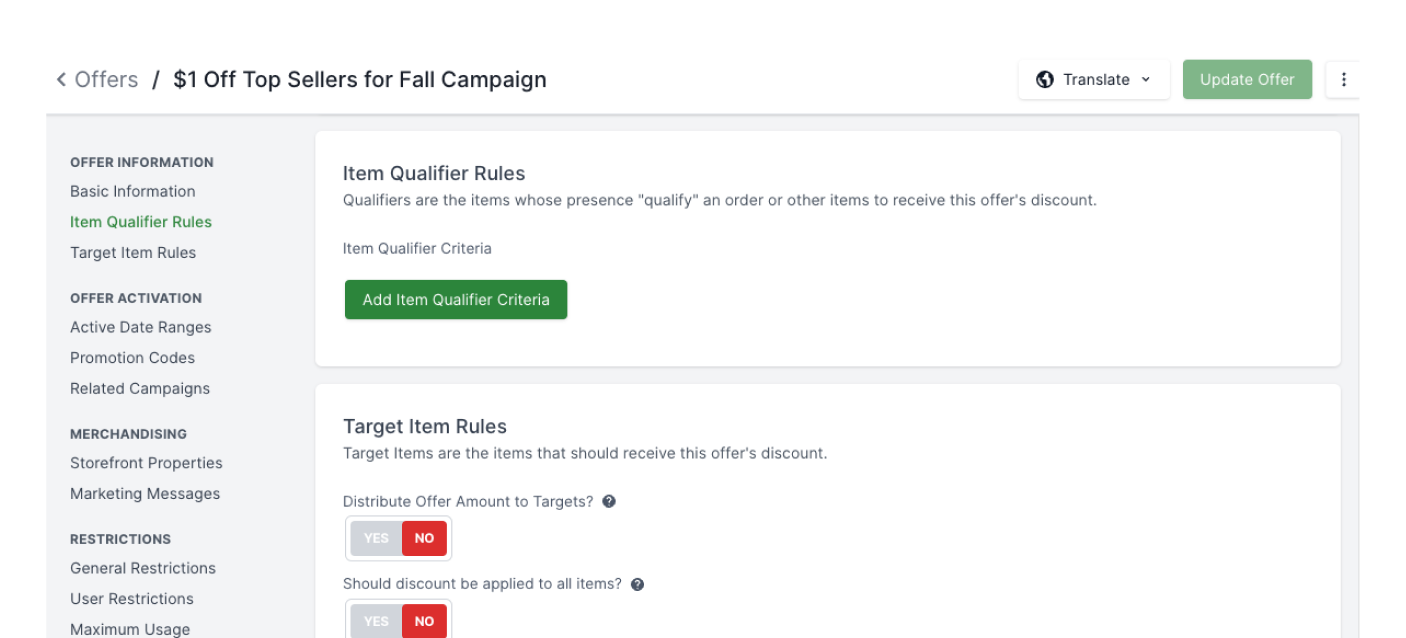
Expert Product View:
Plugging in the "Partner Dashboard"
Metadata reshapes the existing UI, but some missions need a purpose-built one. For these, we leaned on the platform’s ability to plug in custom React UI components.
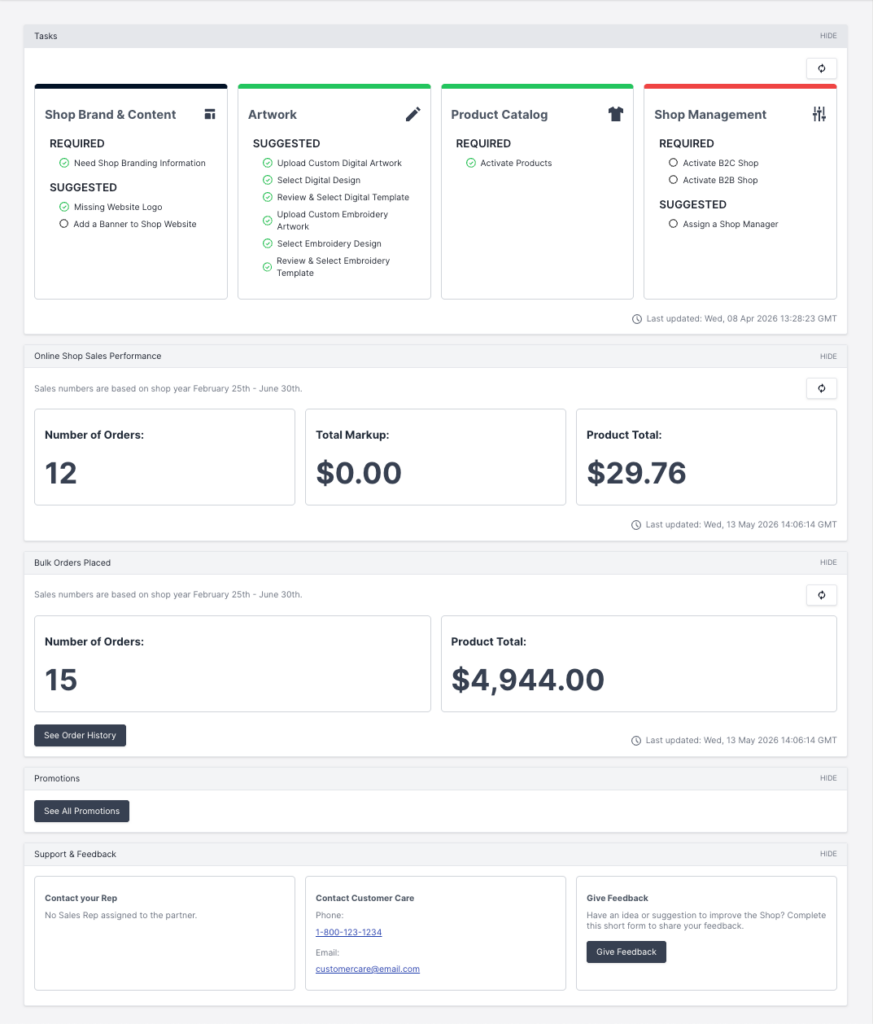
We replaced the standard admin homepage with a bespoke Partner Dashboard. It’s a dedicated React application running inside the Broadleaf Admin shell—a guided mission control for partners:
The Onboarding Checklist: Instead of a complex menu, users see a real-time progress bar and a step-by-step onboarding journey.
Event-Driven Sync: As partners upload artwork or select products, the dashboard updates instantly. Behind the scenes, we use Spring Cloud Stream to listen for events across microservices and update the dashboard state in real-time.
Visual Polish: We used custom-themed React components so the interface feels familiar to non-technical volunteers, giving them confidence to manage their shop.
Custom Dashboard
The "Opt-In" Revolution: Governance with Autonomy
One of the customizations we’re proudest of is the Promotion Opt-In model. In a traditional system, you can either create a discount or you can’t. That forces a choice between total control and none, and neither fits a distributed team.
We solved this with the "Opt-In" Model:
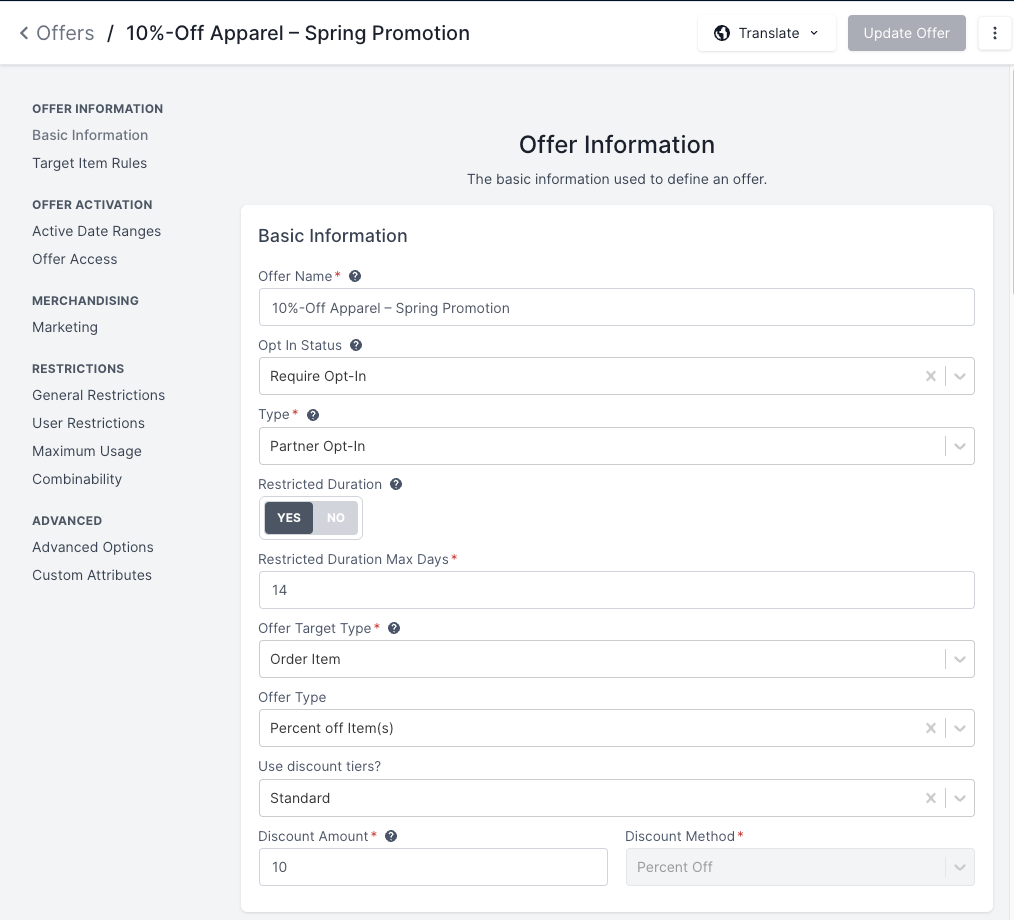
Corporate Authors: A central marketer authors a "National Promotion" (e.g., 20% off for Spirit Week) at the tenant level. They define the guardrails—such as the maximum duration and the approved date range.
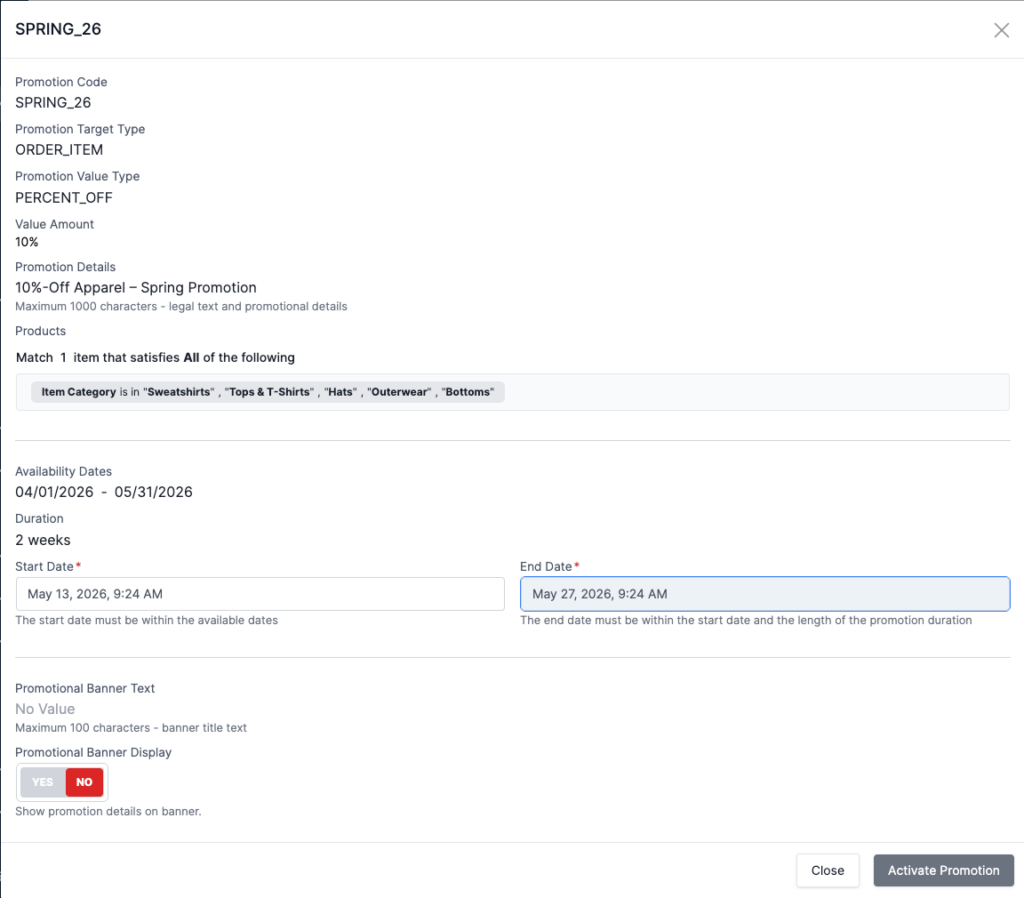
Local Activates: The local manager sees this as an "Available Promotion" on her dashboard. She can't change the 20% discount, but she can opt-in, choose exactly which two weeks it runs locally, and customize the promotional message on her specific homepage.
The result is centralized brand governance without giving up local autonomy.
Expert Promotion View:
Local Administrator Opt-In
A Platform for Platforms
Treating the admin as a modular platform rather than a static tool gave the Home Office its full Command Center and the 10,000 local partners a simple, task-oriented app—from the same codebase.
Contextual Routing and Admin Metadata let the client run a single, unified codebase while still shipping thousands of distinct experiences. The next brand, property, or partner program can plug into that same foundation without a rebuild.