What Is Composable Commerce? A 2026 Guide for Enterprise Teams
Written by
Cassandra Gaston
Published on
Jul 14, 2026
Composable commerce is an architectural approach where each commerce capability, catalog, pricing, cart, checkout, search, loyalty, inventory, is built as a separate, replaceable service instead of bundled into one platform. Services connect through APIs, so a team can swap out or scale any single capability without rebuilding the rest of the stack.
Most enterprise commerce decisions get made under pressure: a legacy platform that's getting harder to extend, an engineering team drowning in maintenance tickets, a vendor pricing change that doesn't work for the business. Composable commerce gets mentioned in almost every one of these evaluations, but the term is used loosely and the definition varies depending on who's selling what.
It covers what composable commerce actually means, how it differs from headless and monolithic approaches, what the major platforms look like, and how to evaluate whether it's the right fit for your team. It's written for enterprise engineering and operations teams, not for people who are new to software.
Where the Term Comes From
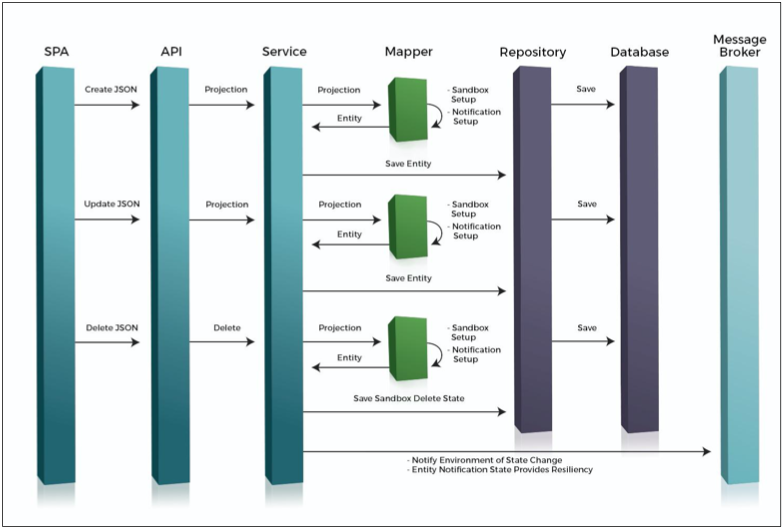
The idea draws from microservices architecture: keep services small, focused, and independently deployable. Each service owns its domain and exposes it through an API. The frontend, other services, and business tools talk to those APIs without caring what's running underneath.
The term gained traction around 2020, partly through the MACH Alliance, an industry group that promotes Microservices, API-first, Cloud-native, and Headless (MACH) architecture principles. The alliance was founded by commercetools, Contentful, Amplience, and others. The underlying architecture principles predate the alliance, but MACH gave it a vendor-neutral label that analysts and buyers could reference.
For a closer look at who actually controls that "C" in practice, see MACH is the right architecture for commerce, but who owns the "C".
Adoption is accelerating, though maturity varies widely. Many organizations running composable architecture today are still migrating core capabilities from legacy monoliths, with full decomposition still years out for most.
Composable Commerce vs. Headless vs. Monolithic: What's the Difference?
The three terms describe different points on a spectrum of architectural coupling. Understanding where the coupling lives helps clarify what each approach actually means in practice.
Monolithic commerce bundles everything together: storefront, catalog, pricing, cart, checkout, and admin live in a single codebase. Upgrades affect everything at once. Adding a custom feature often means modifying core code, which creates upgrade debt. It's the lowest-complexity starting point, but it gets harder to maintain as the business grows.
For a deeper look at why monolithic architecture tends to hit a scalability ceiling, see Beyond Monoliths: How Enterprises Achieve True Scalability.
Headless commerce decouples the frontend from the backend. Your storefront can be a React app or a mobile app talking to the commerce backend via APIs, rather than being embedded in the platform's templating system. The backend may still be a monolith. Salesforce Commerce Cloud, Adobe Commerce, and SAP Commerce Cloud all have headless delivery options while the underlying backend remains largely coupled.
Composable commerce goes further than headless: the backend itself is decomposed. Each capability is its own service, independently replaceable without touching the others.
A useful framing: all composable commerce is headless, but not all headless commerce is composable.
If you're trying to decide which one your business actually needs, see Headless vs Composable Commerce: Which One Do You Actually Need? For how these terms relate to API-first and modular architecture specifically, see Are Headless, Composable, API-first, and Modular Commerce all the same?
When each approach makes sense:
- Monolithic: Small catalog, predictable needs, limited engineering capacity, fast time-to-launch is the priority. The operational simplicity trades off against long-term extensibility.
- Headless: You need frontend flexibility (React storefronts, mobile apps, kiosks) but can live with backend constraints. Good middle ground for teams not yet ready for full architectural ownership.
- Composable: Complex use cases, multi-brand operations, high customization requirements, or teams migrating from a legacy monolith anyway. Requires engineering depth but pays off at scale.
Benefits of Composable Commerce
The business case for composable commerce comes down to a few concrete things that most enterprise teams care about, rather than abstract architectural principles.
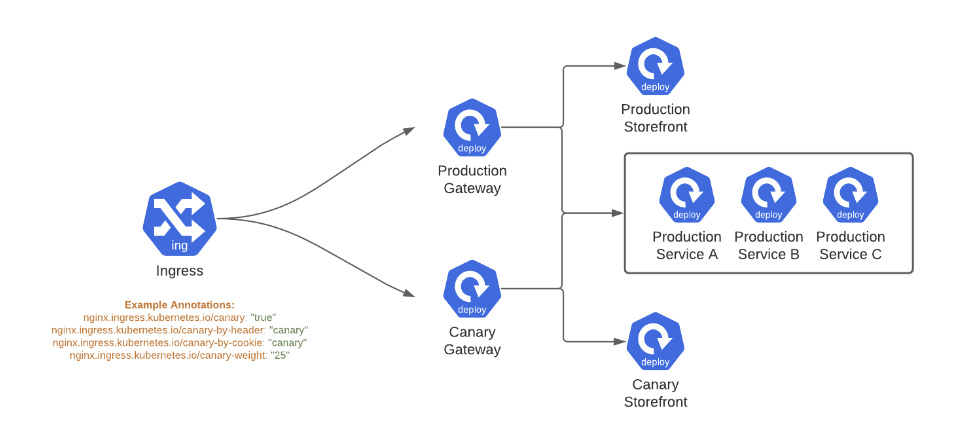
Replace underperforming services without a full migration. If your search vendor can't handle your catalog complexity, you can swap it without touching pricing, cart, or checkout. This is the fundamental advantage over monolithic platforms, where upgrading one component often requires testing the entire system.
Run multiple brands, regions, or business models from one backend. Composable architectures separate the business logic (what a product costs in a given context, what rules apply to a given buyer type) from the presentation layer. That separation is what enables a single backend to serve a B2C storefront, a B2B portal, and a dealer network without duplicating infrastructure.
Build once, serve everywhere. APIs don't care whether the caller is a web app, a mobile app, a POS terminal, or a voice assistant. Your catalog, pricing, and inventory data is accessible from any channel without rethinking the backend.
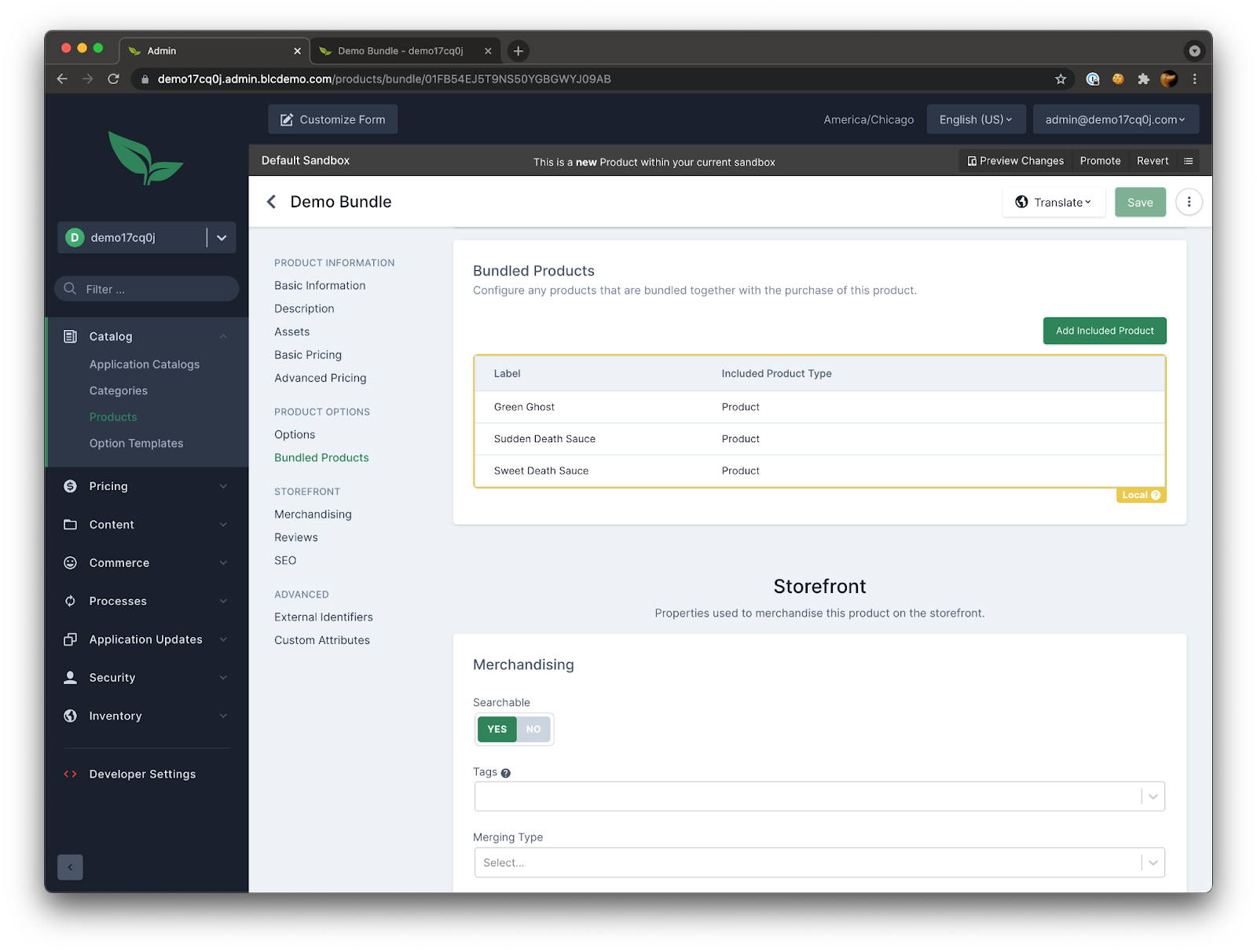
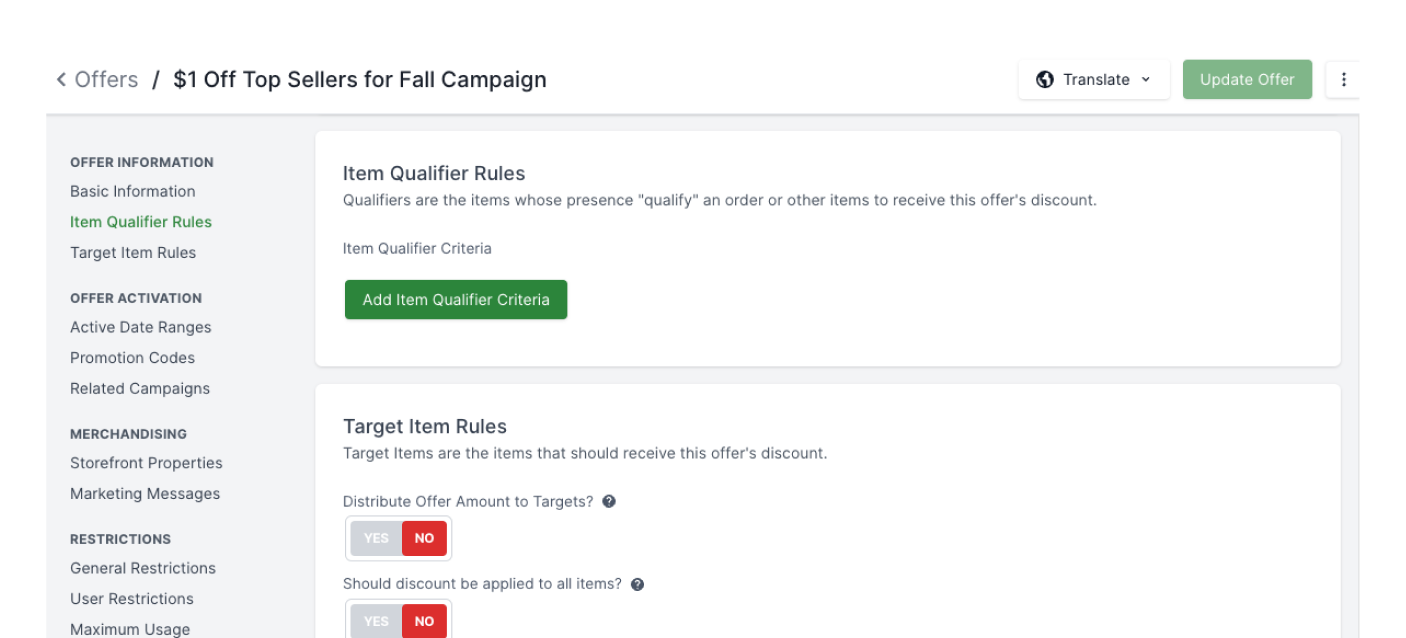
Reduce engineering dependency for day-to-day commerce operations. On monolithic platforms, business teams file tickets for pricing changes, promotion configurations, and catalog updates that should be self-service. Composable platforms expose these capabilities through APIs and admin tooling that's designed to be used directly by merchandisers and marketing teams.
Avoid roadmap lock-in. When your commerce vendor sets the roadmap, you wait. When your platform is composable, you can extend it without modifying vendor code, or replace a component entirely if the vendor's direction doesn't match yours.
More predictable cost at scale. Some platform licensing models include GMV-based fees that scale with your revenue. At high transaction volumes, those fees can become a material budget line. Source-available or flat-fee licensing models give you a cost structure that doesn't grow proportionally with your GMV.
Is Composable Commerce Right for Your Business?
Composable isn't a universal upgrade. It's the right architecture for a specific set of circumstances.
Good fit signals:
- You're managing multiple brands, regions, or storefronts that share backend logic but need independent presentation layers
- Your engineering team is blocked by your current vendor's roadmap or customization limits
- You're planning a major migration anyway, so the architectural switch is unavoidable
- Your team has experience with microservices, APIs, and distributed systems
- Your B2B requirements (account hierarchies, contract pricing, approval workflows) exceed what your current platform handles natively
Poor fit signals:
- Small catalog with predictable seasonal patterns and limited customization needs
- Limited engineering capacity: composable architectures require ongoing ownership of service integrations
- Aggressive launch timeline with no prior composable experience on the team
- Your current platform handles your actual requirements well; the migration would be net-negative on productivity
For a deeper evaluation framework, including a self-assessment by industry, ROI considerations, and an implementation checklist, see Is Composable Commerce Right for Your Business? A Practical Evaluation Guide.
One honest framing: composable commerce isn't necessarily harder than monolithic commerce, but it does require your team to own the integration layer. On a monolithic platform, that integration is baked in and managed by the vendor. On a composable platform, it's yours. That's the trade-off.
These platforms appear most frequently in enterprise composable commerce evaluations. Each takes a different approach to architecture, licensing, and deployment. The right choice depends on your technical stack, B2B requirements, team capacity, and budget model.
1. Broadleaf Commerce
Architecture: Java/Spring Boot microservices; source-available codebase
Best for: Enterprise brands with complex B2B workflows, multi-brand operations, or teams migrating from Oracle ATG, SAP Hybris, or IBM WebSphere Commerce
Licensing: Source-available with enterprise contracts; no GMV-based fees; flat-fee licensing with full source access
Deployment: Cloud-agnostic (AWS, Azure, GCP), on-premises, or Broadleaf Cloud (fully managed)
Notable: One of the few enterprise composable platforms that provides full source code access without GPL restrictions, giving engineering teams visibility into every layer of the platform. The multi-tenant admin supports multiple brands, geographies, and catalogs from a single instance. Built specifically for Java/Spring shops migrating off legacy monoliths.
Architecture: Cloud-native, API-first SaaS
Best for: Teams prioritizing rapid frontend development and a broad integration ecosystem
Licensing: SaaS subscription; some tiers include revenue-based fees; pricing scales with usage
Deployment: SaaS only (commercetools-hosted infrastructure)
Notable: commercetools is one of the founding members of the MACH Alliance; large partner and systems integrator ecosystem. No built-in admin UI for merchandisers; teams typically build their own or use a third-party product information management tool. Strong choice for teams comfortable owning frontend and admin tooling.
3. Elastic Path
Architecture: Headless, API-first; available as SaaS or self-managed
Best for: Mid-market to enterprise brands that want composable architecture with pre-built product experience templates
Licensing: Subscription-based; offers a development-tier free option for evaluation
Deployment: SaaS or self-hosted
Notable: Product Experience Manager (PXM) is a differentiator for catalog-heavy use cases. Native B2B subscription capabilities round out the platform for recurring-revenue models. Elastic Path is a good middle ground for teams that want composable architecture without building everything from scratch.
4. Spryker
Architecture: PHP-based microservices; headless-first design
Best for: Enterprise B2B commerce, marketplace models, and organizations with significant international operations
Licensing: Enterprise SaaS
Deployment: Cloud or on-premises; PaaS model gives more code access than pure SaaS alternatives
Notable: Spryker is well-established in European enterprise markets, with a strong track record in B2B2C models that need native marketplace capabilities. The PaaS deployment option gives engineering teams more direct access to application code than a fully managed SaaS model.
5. VTEX
Architecture: Multi-tenant SaaS with native composability through the VTEX IO development platform
Best for: Enterprise retailers in Latin America and global brands entering emerging markets; strong native omnichannel and marketplace features
Licensing: SaaS; GMV-based pricing model
Deployment: Fully SaaS
Notable: Strong native marketplace and omnichannel fulfillment capabilities. The VTEX IO platform allows custom applications without forking core platform code. Pricing model scales with transaction volume, which is a consideration for high-GMV operations.
Evaluating composable commerce platforms is easier with a consistent framework. Seven questions that surface the meaningful differences:
1. Is it actually composable, or just headless? Ask whether core backend services (catalog, pricing, cart) can be replaced independently. Some platforms use "composable" marketing language while the backend remains tightly coupled. Request an architecture diagram showing service boundaries.
2. What is the licensing model? SaaS subscription, GMV-based fees, and source-available licensing all have different cost curves at scale. Run a 5-year model at your projected transaction volume before signing.
3. Do your engineers get source access? Source-available and open-source platforms let your team read and modify core logic without workarounds. SaaS platforms limit what's visible and modifiable. For teams migrating off legacy monoliths, source access often determines what's actually achievable.
4. Can it deploy where you need it? Cloud-agnostic deployment, on-premises options, and data sovereignty requirements vary by industry and geography. Not all platforms support all configurations.
5. What are the B2B capabilities out of the box? If you need account hierarchies, contract pricing, approval workflows, or quote negotiation, ask for a demo of those features specifically, not a high-level overview.
6. Can one instance support multiple brands or tenants? Multi-brand operations that require shared catalog data, shared pricing logic, and independent storefronts need a platform designed for multi-tenancy. This is architecturally different from running separate instances and is not universally supported.
7. What is the migration path? A forced full-cutover migration is higher risk than an incremental adoption strategy. Ask whether you can run the new platform in parallel with the existing one, migrating capabilities over time.
What Does Composable Commerce Cost to Implement?
Cost ranges vary widely, but here are realistic benchmarks based on enterprise implementations:
Platform licensing: $50,000 to $500,000+ per year, depending on vendor, tier, and whether GMV-based fees apply. Source-available or flat-fee models offer more predictable costs at scale.
Implementation: 6-18 months for a full migration from a legacy monolith, with a team of 5-15 engineers. Timeline scales primarily with the number of custom integrations and catalog complexity.
Integration costs: Search, CMS, PIM, payment processing, and OMS are separate line items. Each integration has its own licensing, implementation, and maintenance cost.
Ongoing engineering: Composable platforms require an internal team to maintain service integrations and extensions. Budget for at least 2-3 dedicated engineers for ongoing platform ownership.
The GMV question: Platforms with GMV-based pricing can become expensive relative to flat-fee alternatives at high transaction volumes. As a hypothetical: at $500M in annual GMV, even a fraction-of-a-percent revenue fee represents hundreds of thousands of dollars per year, a cost that scales directly with your growth.
For a deeper breakdown of these cost categories, including how CFOs should think about ROI and TCO before approving a composable rollout, see Composable Commerce for CFOs: 13 Questions Revealing Hidden Costs and Benefits.
Frequently Asked Questions
What is the difference between composable commerce and headless commerce?
Headless commerce separates the frontend (storefront) from the backend commerce system, but the backend may still be a monolith. Composable commerce goes further: the backend is also decomposed into independent services. All composable commerce is headless by definition, but headless commerce is not automatically composable.
It depends on the vendor and your transaction volume. Some composable platforms use GMV-based pricing that grows with your revenue. Others use flat-fee or source-available licensing. For large enterprises, GMV-free licensing often reduces total cost of ownership compared to traditional enterprise SaaS. The implementation cost is comparable to any full replatforming project.
What is the MACH Alliance?
The MACH Alliance is an industry association that advocates for Microservices, API-first, Cloud-native, and Headless (MACH) architecture principles in commerce technology. Members include commercetools, Contentful, Amplience, and others. MACH membership is not a requirement for a composable architecture; several capable platforms are not members.
How long does a composable commerce implementation take?
A full migration from a legacy monolith typically takes 6-18 months with a team of 5-15 engineers, depending on catalog complexity, integration count, and customization requirements. Incremental migrations (running old and new platforms in parallel) can extend the total timeline but significantly reduce cutover risk.
Does composable commerce require rebuilding the storefront?
Not necessarily. Many teams adopt composable commerce incrementally, replacing backend services one at a time while keeping the existing storefront running. A full headless storefront rebuild can run in parallel or follow the backend migration, depending on your priorities.
Where to Go From Here
If you're evaluating composable commerce platforms, the next useful step is comparing specific options against your requirements rather than continuing at a conceptual level.
For engineering teams: The fastest way to evaluate Broadleaf's architecture is to get eval access and read the source code directly. Most teams do an architecture review in 2-3 days.
For business buyers and digital leaders: Talk with our team about your specific use case, current platform, and timeline. We can share reference customers in your vertical.
Information on competitive products is accurate as of April 2026 based on publicly available sources. Contact vendors directly for current pricing and capabilities.