The Renewal Cliff Nobody Budgets For
Written by
Cassandra Gaston
Published on
Oct 20, 2026
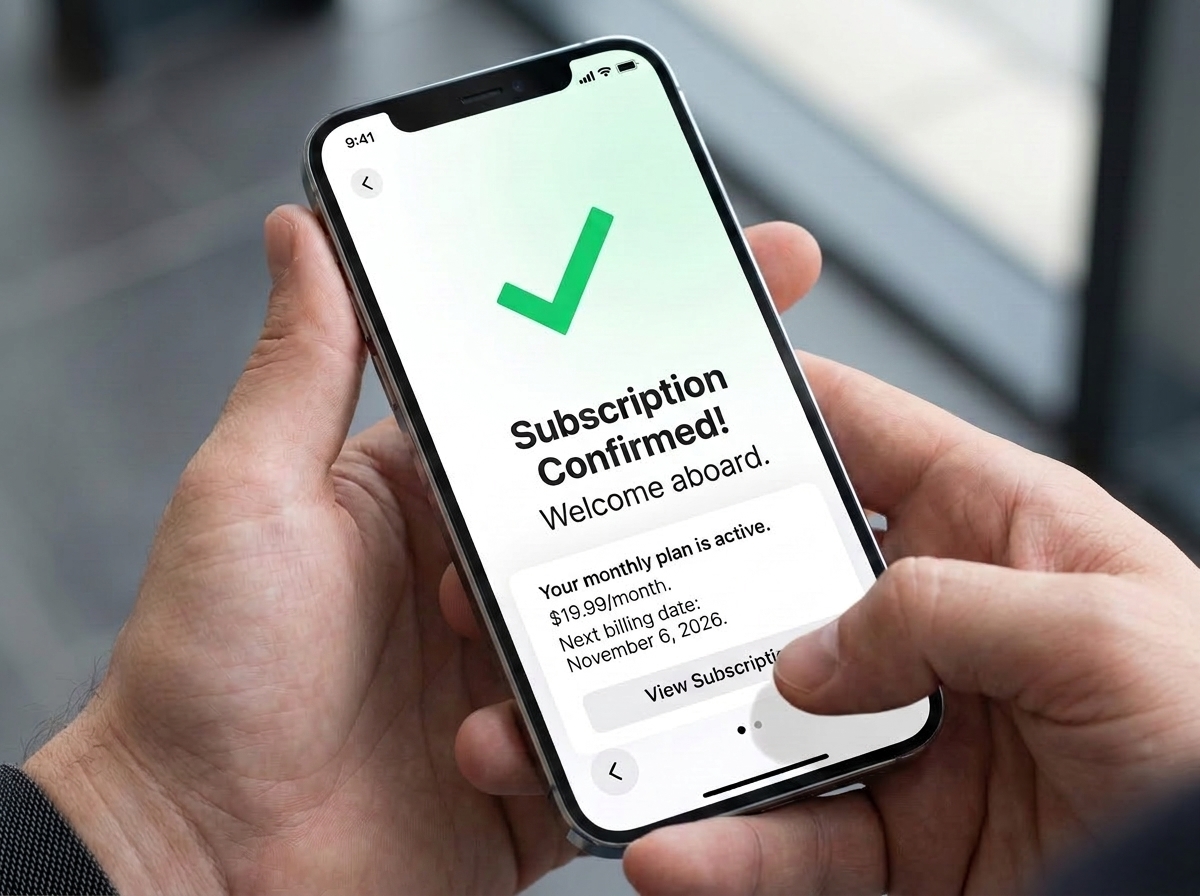
A subscription launch gets a pricing model, a trial length, and a welcome email. The first renewal gets none of that planning, even though it’s the moment a subscription program actually loses the most people, not the second or third renewal, the first one. A customer signs up for a launch offer, forgets to think about it again, and then a charge shows up on their card for a price they don’t remember agreeing to. Multiply that across a signup cohort and the first renewal window is the single highest-churn moment most subscription programs will ever have, and almost none of them plan for it the way they planned for the launch.
Catching that moment means reaching people before they’ve decided to leave, not winning them back after. A short renewal-window discount, visible only to accounts approaching their first billing cycle, framed as a thank-you instead of a last-chance offer. Designing that offer is rarely the hard part. The hard part is reaching the right accounts without building a second system to do it.
Why this usually means two systems, not one
Subscription billing and promotions have historically lived in different tools, because most commerce platforms bolted subscription support on after the fact instead of building it into the same pricing and promotion engine everything else runs through. The billing system knows who’s a subscriber and when they renew. The promotion engine knows how to build a discount. Getting an offer in front of “accounts with an active subscription inside a specific renewal window” usually means exporting a list from one system and importing it into the other, or asking engineering to write a one-off eligibility check that lives nowhere anyone else can find later.
That split is the real cost, not the discount logic itself. A subscriber win-back offer is rarely hard to design. It’s hard to scope, because nobody can agree on which system owns the audience definition, let alone who maintains it once the campaign ends.
What a native recurring discount changes
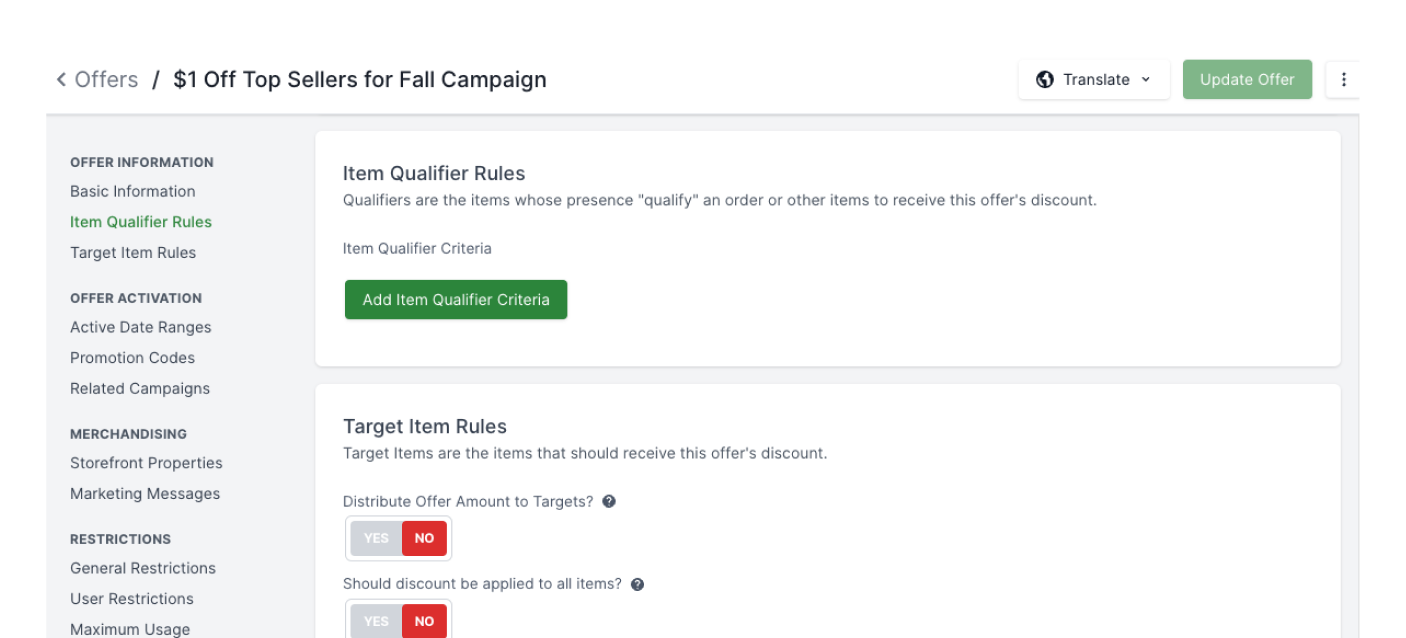
Broadleaf’s subscription commerce pricing and offer engines ship a recurring-discount adjustment type, introduced alongside native subscription pricing in Release Train 2.2.0, built to discount a subscription’s recurring price for a defined range of billing periods instead of a one-time charge. A “50% off for the first 3 months” offer is configured with a start and end billing period, in the same admin screen used for every other promotion, and the discount applies automatically each period in that range.
That matters most for a renewal-window offer specifically. If a signup cohort’s whole launch window is two weeks wide, the billing period right before everyone’s first renewal is the same handful of period numbers for the entire group. The eligibility rule, discount only the periods right before that first renewal, lives in the same place as the discount logic itself, not bolted on beside it. Nobody has to export a cohort list into a separate tool to make that offer real.
I’m not going to pretend that’s a neutral read. We build the platform this runs on, so of course the version where you don’t need a second system is the one we’d point to. But the question worth asking before committing to a subscription program isn’t which vendor describes it best. It’s simpler: does your promotion engine already know what a subscriber is, or does someone have to teach it every time a campaign needs it?
What makes a renewal offer worth running
The eligibility has to be narrower than the discount. A modest percentage off the renewal charge, active only inside a defined window before the billing date, with account-level eligibility doing the real work of making sure it reaches only the accounts actually approaching that first renewal. An offer that leaks to subscribers who were never at risk of leaving trains the whole base to expect a discount at renewal, which is a far more expensive problem than the one it was meant to solve.
The rule has to be auditable after the fact. Setting the eligibility and the discount in the same place means the whole rule is visible at a glance weeks later, instead of cross-referencing a spreadsheet against a system someone else has to query. That matters most a month after a campaign ends, when someone asks exactly who it reached and why, and “let me check with the other team” isn’t a good enough answer.
The part worth remembering
A subscription program doesn’t fail at launch. It fails quietly, one renewal cycle at a time, to customers who never got a reason to stay. Catching that requires a promotion tool that already understands what a subscriber is, not a second system someone has to remember to keep in sync with the first one.
If you’re setting up a subscription program and you haven’t run the renewal math yet, it’s worth running before the first cohort hits its cliff, not after. Talk to us about how recurring-discount eligibility works before you’re the one explaining a retention dip to a room that was expecting a growth number.